Visit the website for your country to get more information and discover our products.
 Argentina
 Australia
 Brazil
 Bulgaria
 China
China Czech Republic
 Denmark
 Finland
 France
 Germany
 Hungary
 India
India Italy
Italy Netherlands
 North America
 Norway
 Poland
 Portugal
 Romania
 Singapore
 Slovenia
 South Africa
 South Korea
 Spain
Spain Sweden
 Switzerland
 Thailand
 Türkiye
 United Arab Emirates
 United Kingdom
22/10/2026

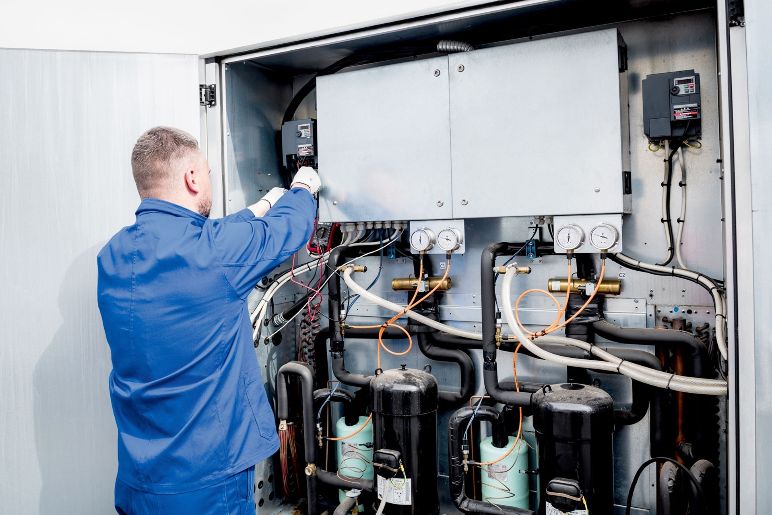
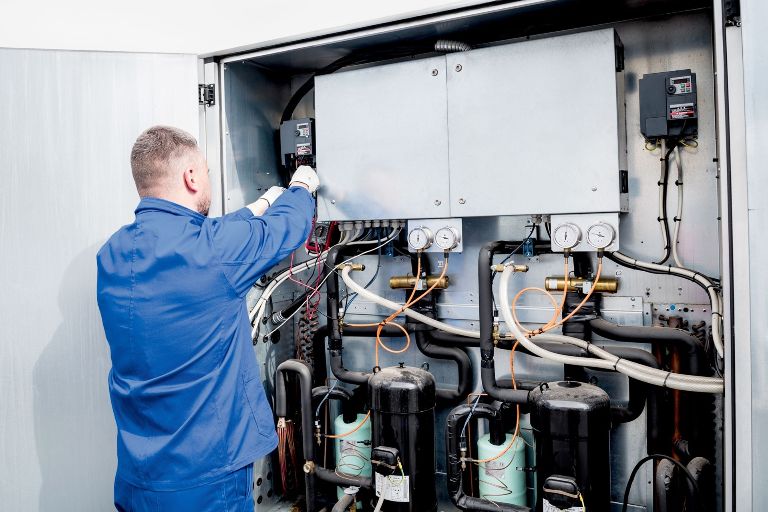
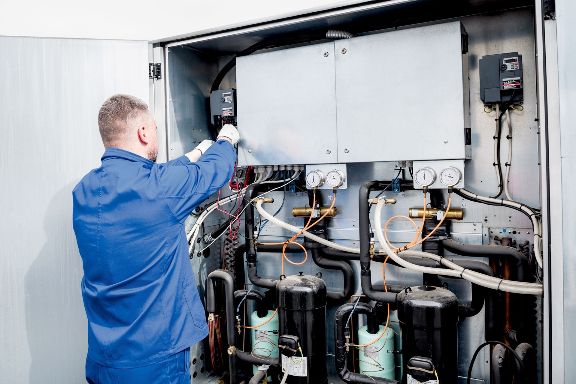
Reliable cable management is essential for HVAC wiring, heat pump wiring and the safe organisation of electrical wiring for HVAC equipment. Proper cable routing, fastening, separation and protection improve electrical safety, reduce the risk of loose connections, short circuits, trip hazards and cable damage, and help prevent overheating by keeping cables clear of airflow paths.
When wiring HVAC systems and heat pumps, durable cable management also aids cost-efficiency. Securely fixed cables are less likely to move, rub against sharp edges or suffer vibration damage, helping to avoid costly faults and downtime. Clear routing and labelling make maintenance, inspection and troubleshooting easier, while suitable cable protection systems shield outdoor installations from UV radiation, moisture, and mechanical stress.
Whether installers are wiring an HVAC system or integrating heat pump electrical wiring, the right combination of cable ties, clips, conduits, tubing and identification products helps keep cables securely routed, protected and accessible throughout the system lifecycle.
Cable management components used for HVAC and heat pump wiring need to withstand demanding environments. Depending on the installation area, this may include temperature fluctuations, UV exposure, vibration, moisture, and mechanical stress.
Reliable cable management for HVAC systems supports long-term system performance by keeping wiring fixed, organised and protected. This is especially important in outdoor heat pumps, rooftop HVAC units, air handling units, control cabinets, ducts, compressor areas and compact equipment zones where cables may be exposed to movement, heat, condensation or service access.
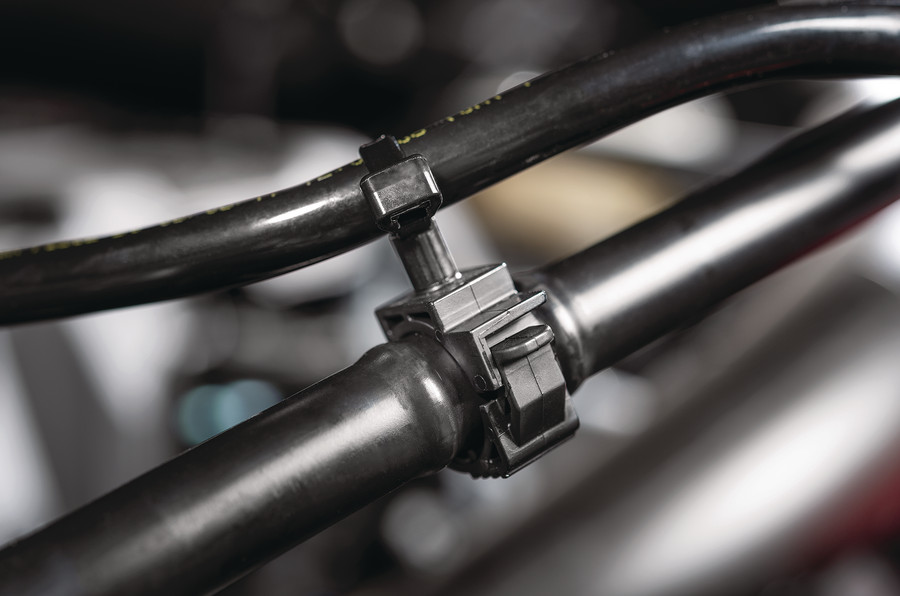
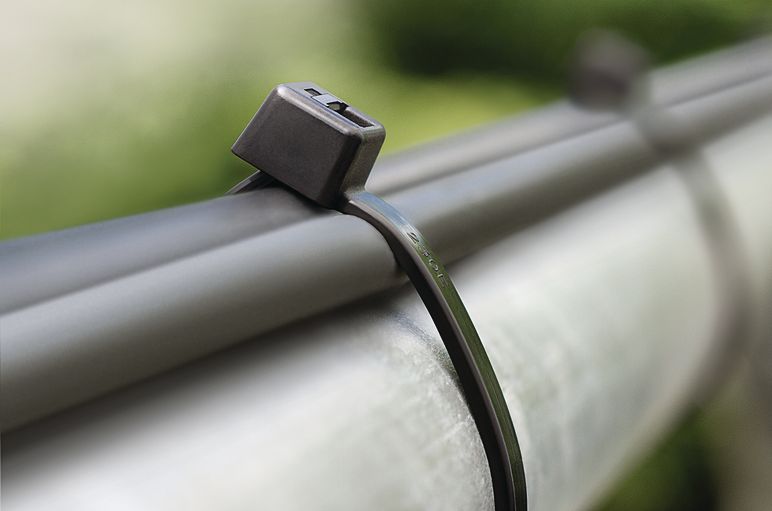
Cable ties are a key component for HVAC wiring and heat pump wiring. They are used inside and around units, control cabinets, air handling units and duct systems. For outdoor heat pump installations or areas exposed to sunlight, UV-resistant cable ties help maintain reliable fastening performance over time.
In areas exposed to higher operating temperatures, heat-stabilised cable ties support long-term cable fixation and reduce the risk of material degradation. For larger cable bundles or areas subject to vibration and mechanical stress, heavy-duty cable ties help maintain secure fixation inside HVAC units, heat pumps and air handling equipment.
For example, the two-piece fixing tie T50RSFT6.5 is made from heat-stabilised PA66HS and is suitable for operating temperatures from -40 °C to +105 °C. It also provides a minimum tensile strength of 225 N, which is relevant where cable bundles must remain securely fixed despite vibration or mechanical load.
Cable ties for HVAC systems and heat pumps:
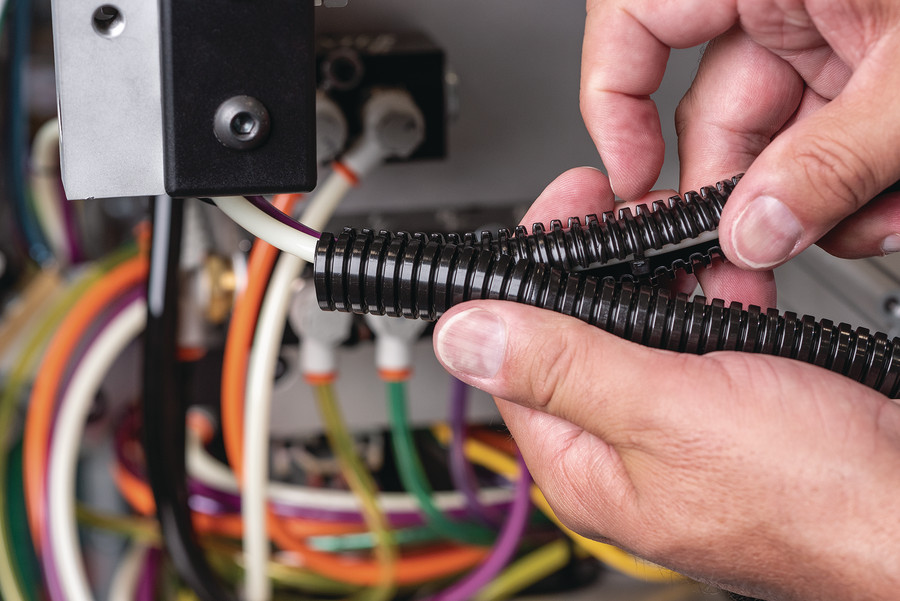
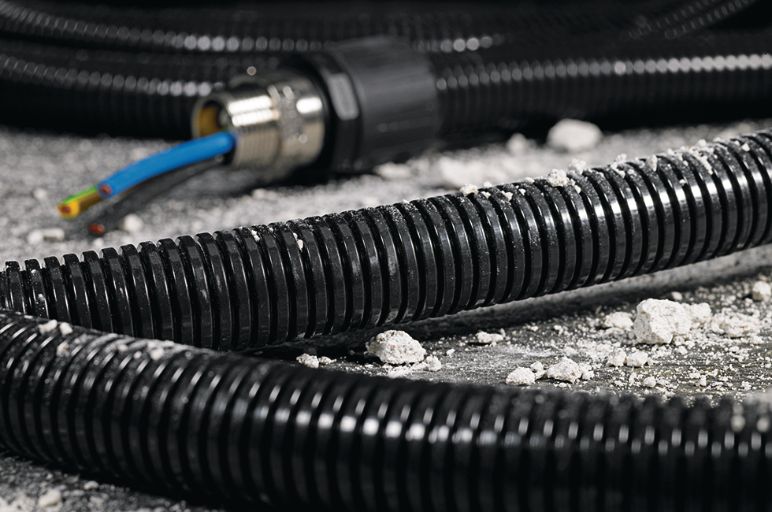
Corrugated conduits and protective hoses are used where cables require additional mechanical protection. In HVAC systems and heat pumps, they help shield wiring from abrasion, impact, vibration and contact with sharp metal edges. They are particularly useful in air handling units, outdoor heat pumps, duct systems, compressor areas and equipment sections where movement or service access may affect cable routing.
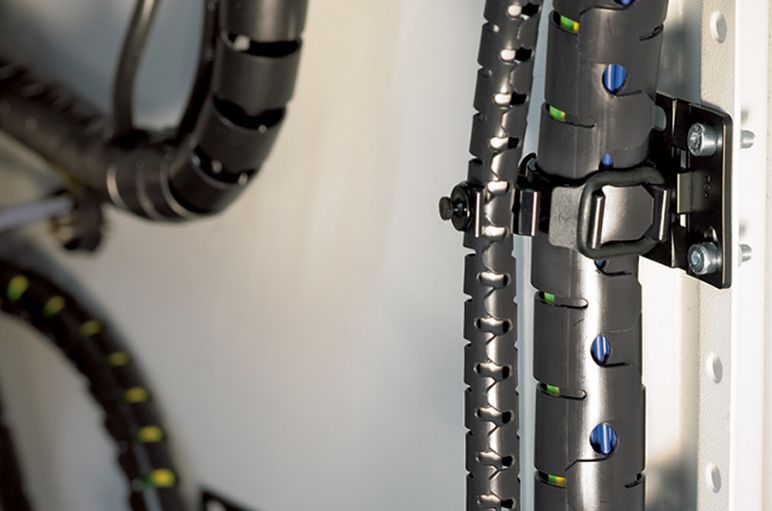
Depending on the installation area, flexible conduits, corrugated tubing or protective sleeving can be used as part of a complete cable protection concept for HVAC equipment. These solutions are especially useful where HVAC cables need to be routed through compact spaces, around sharp edges or through areas exposed to vibration, moisture or mechanical stress.
For example, HG-SW10 corrugated flexible conduit is halogen-free, self-extinguishing according to UL94 V2, oil-resistant, has an operating temperature range from -40 °C to +120 °C and can achieve IP66 protection in combination with suitable HG fittings. Therefore, these corrugated tubings are ideal for wiring HVAC systems and heat pumps, as they can be used for routing cables through areas exposed to condensation, vibration, oils, cleaning chemicals or mechanical stress.
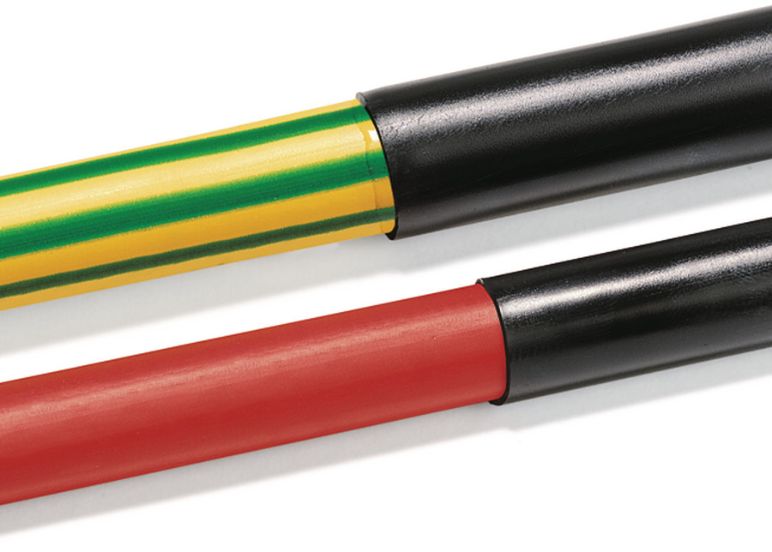
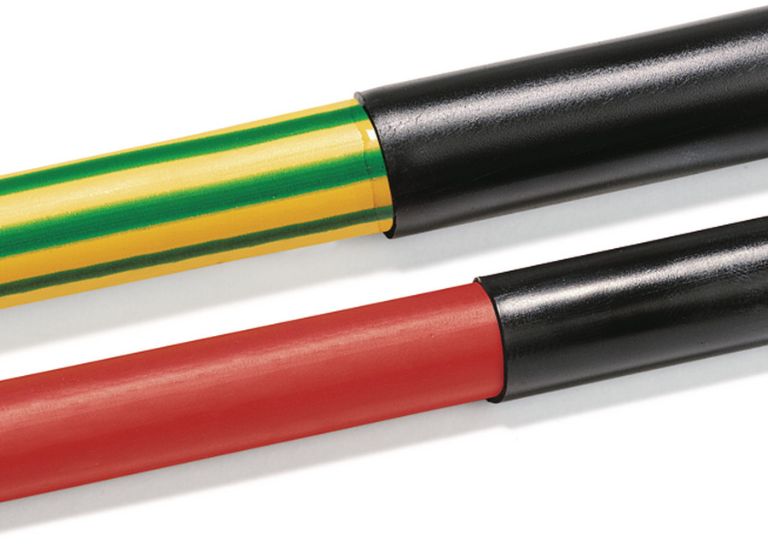
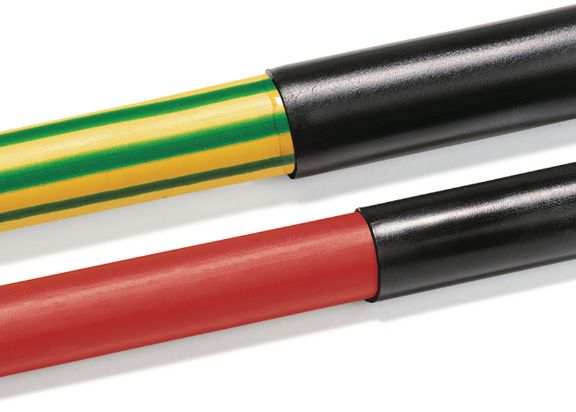
Heat shrink tubing is used to insulate, bundle, seal and protect wire connections in HVAC systems and heat pumps. By covering cable joints, terminations or sensitive areas, heat shrink tubing helps reduce the risk of moisture ingress and supports long-term electrical reliability. This is particularly important in HVAC and heat pump wiring that may be exposed to moisture, condensation, or changing temperatures.
In areas exposed to elevated temperatures, heat-resistant tubing and adhesive-lined heat shrink tubing can help protect cable joints, terminations and repaired cable jackets. The right tubing solution depends on the application area, temperature exposure, cable material and required level of sealing or mechanical protection.
For example, adhesive-lined TA42 heat shrink tubing is used in HVAC systems to seal around cables as the adhesive lining offers strong moisture protection as well as allows for repair of damaged cable jackets without removing connectors.
Efficient cable routing determines how easily wires can be integrated into the structure of an HVAC or heat pump systems. For this, fastening products that work with metal edges, frames, panels, ducts, and housings are needed.
Reliable cable integration is especially important where heat pump wiring, control wiring, sensor cables, fan wiring or cable bundles need to be installed in compact or vibration-prone areas. Suitable cable ties, clips, mounts and conduits help prevent cable movement, reduce abrasion and improve installation quality.
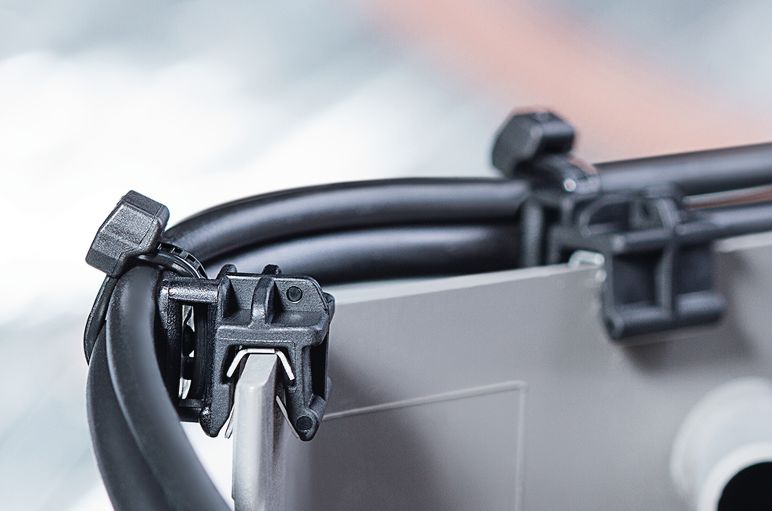
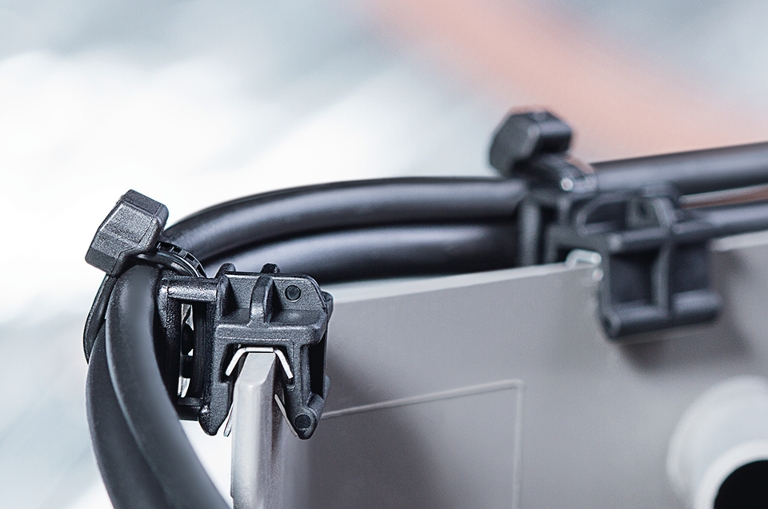
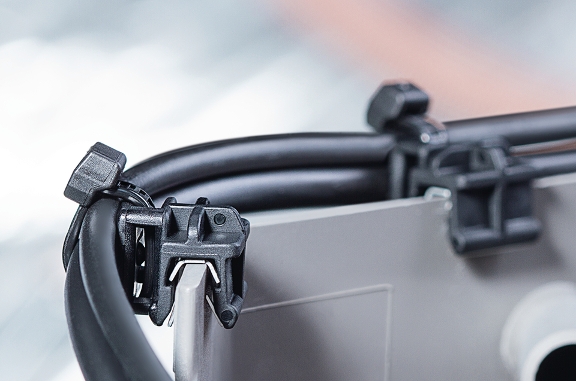
Cable clips are useful where cables, corrugated conduits or hoses need to be fixed directly to HVAC structures without additional cable ties. This is especially relevant in compact units, sheet-metal housings, ventilation equipment and heat pumps where space is limited and quick assembly is important.
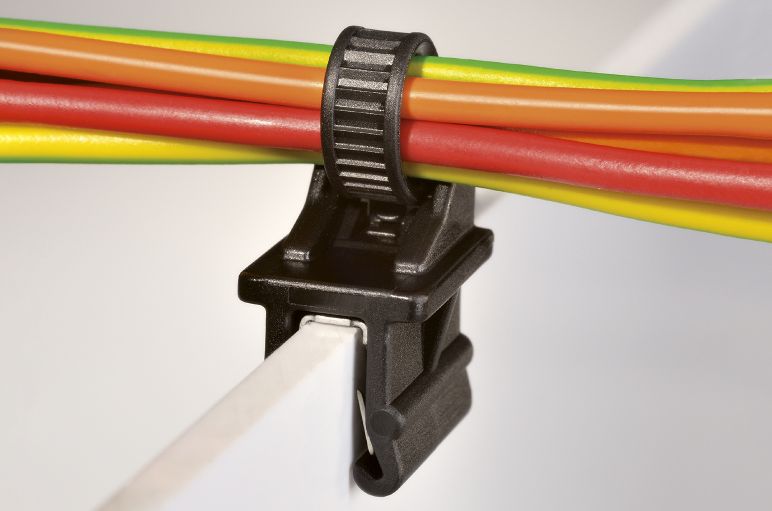
For example, edge clips allow cables, wires or hoses to be fastened directly to sheet metal edges or structural elements without drilling or using screws. By avoiding drilled holes, edge clips help maintain the integrity of panels and housings. They also support flexible cable routing along existing structures, which is particularly useful for HVAC wiring.
A suitable edge clip or low-profile cable clip can simplify routing along sheet-metal edges, panels or compact HVAC structures. These HVAC clips are useful where cable routing must follow existing metal edges without drilling, screwing or additional mounting hardware.
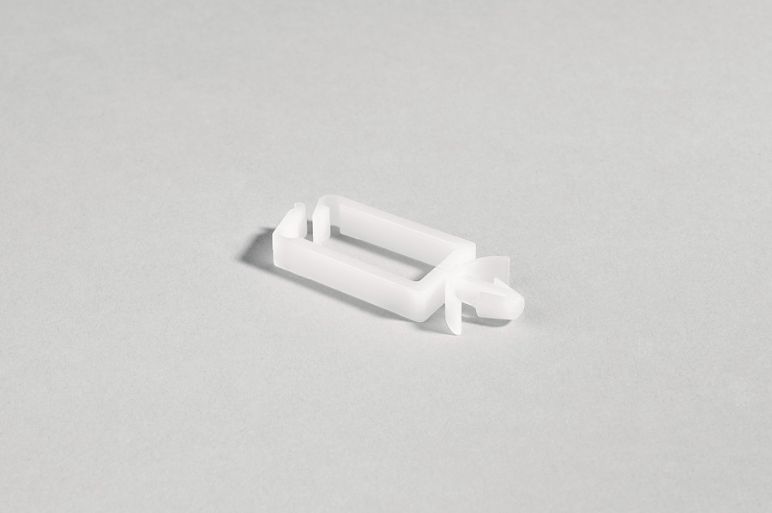
The lockable cable clip LOC5-9FT6LG is particularly useful for routing conduits or small pipes near compressors, motors or fans, because the cable or conduit can be mechanically retained without relying only on a cable tie. The lockable design supports secure fixation, while the removable feature can simplify service or rework. It is made from heat- and UV-stabilised polyamide 6.6 and has an operating temperature range from -40°C to +105°C.

Push-in mounts and similar fastening elements are designed for quick installation into predefined holes or mounting points. They can help speed up assembly processes and create repeatable cable routing layouts across different HVAC systems or heat pump models.
For manufacturers and installers, this can support standardisation, reduce manual effort and improve process reliability. When combined with suitable cable ties, push-in mounts provide a secure fixing point for cable bundles, hoses or conduits.
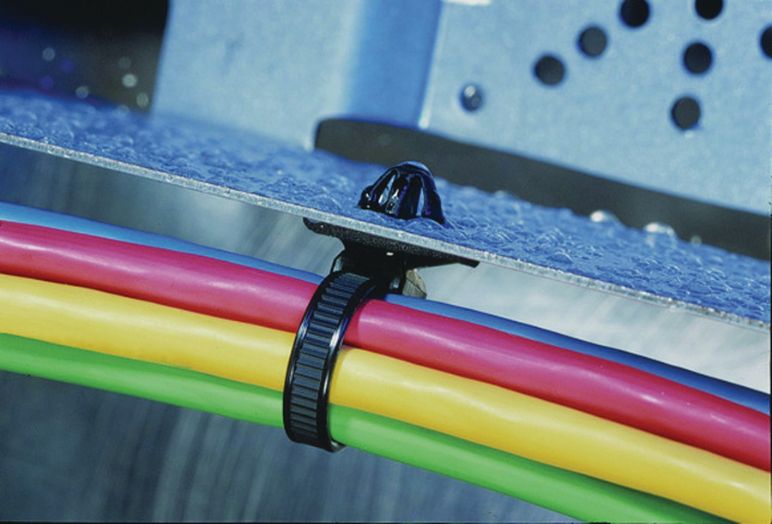
For example, WPC5 wire push-in clip is suitable for HVAC wiring in narrow spaces, such as control areas, frames, rails and compact equipment zones as the one-sided access simplifies installation in closed or compact units. They also reduce installation time because they are made for repeatable serial assembly and no screw, nut or additional fixing operation is required.
Cost-efficient cable management for HVAC systems and heat pumps is achieved through faster installation, reduced maintenance effort and reliable long-term performance. The right combination of fixing, routing, protection and identification products can help manufacturers, installers and service teams improve process efficiency across the entire system lifecycle.
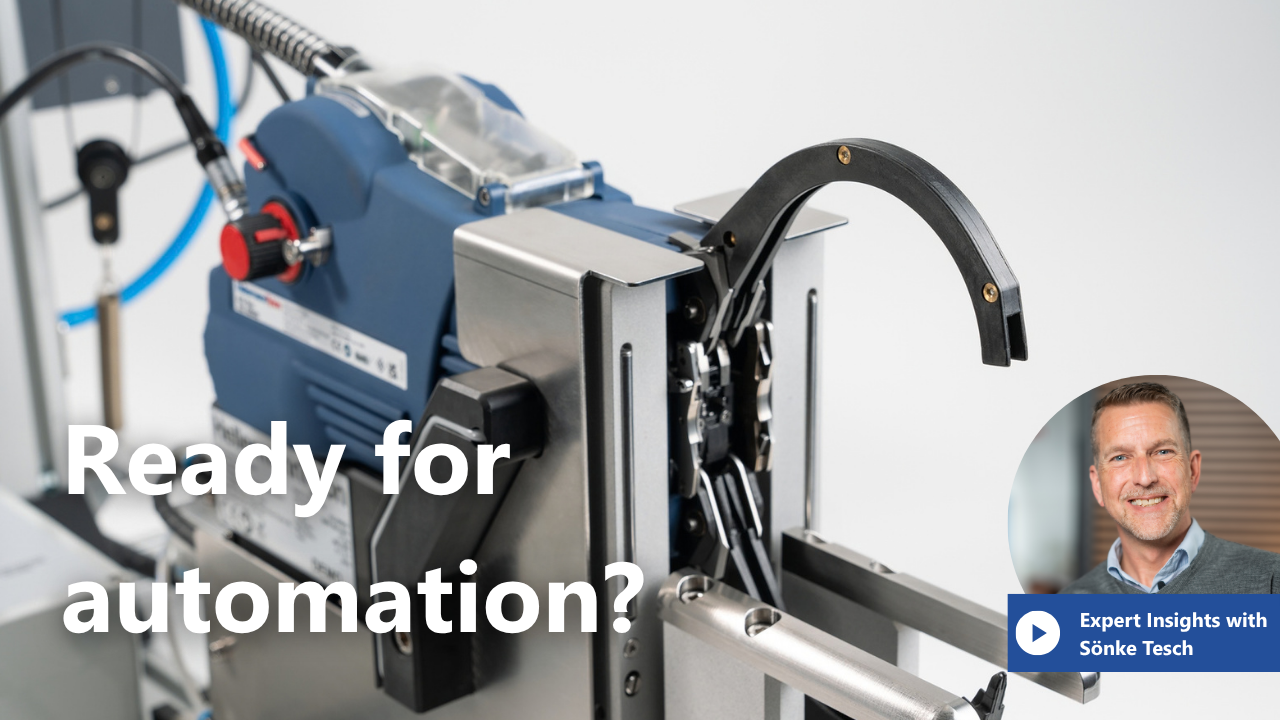
Predefined fastening points, push-in mounts, edge clips and suitable cable ties can reduce assembly time and support consistent installation quality. This is particularly important in serial production of HVAC units and heat pumps, where repeatability and speed are key.
Using compatible cable ties, heavy-duty cable ties, clips, conduits, insulation and identification products also reduces complexity in purchasing, warehousing and installation. For applications with higher mechanical load, larger cable bundles or vibration, heavy-duty cable ties can provide additional fixing reliability.
Installation tools can also help ensure consistent cable tie tension and cutting quality. This improves process reliability and reduces the risk of over-tightening or damaging cables during assembly.

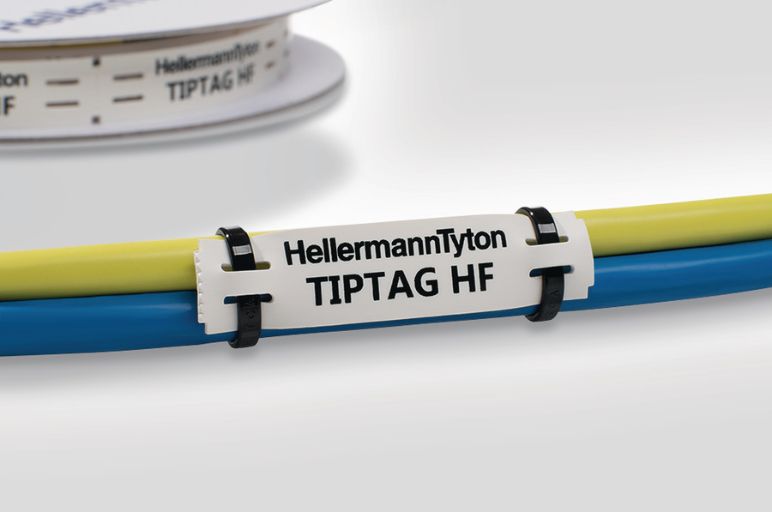
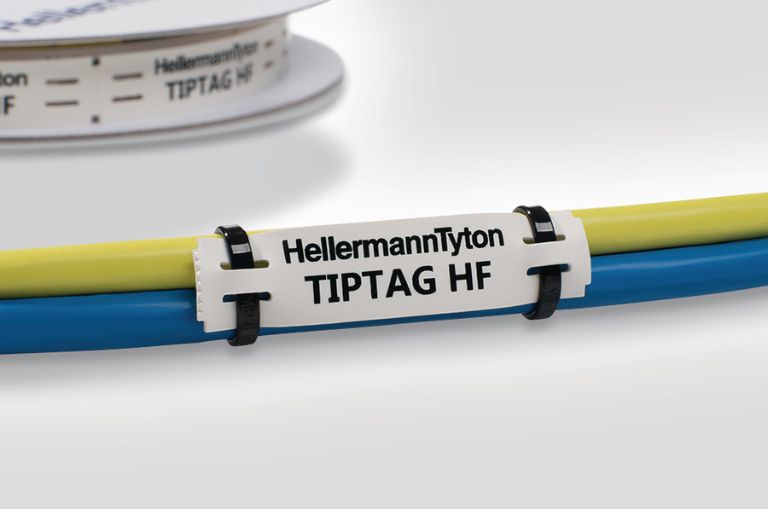
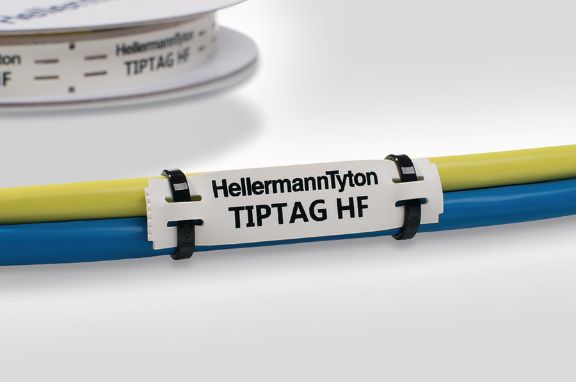
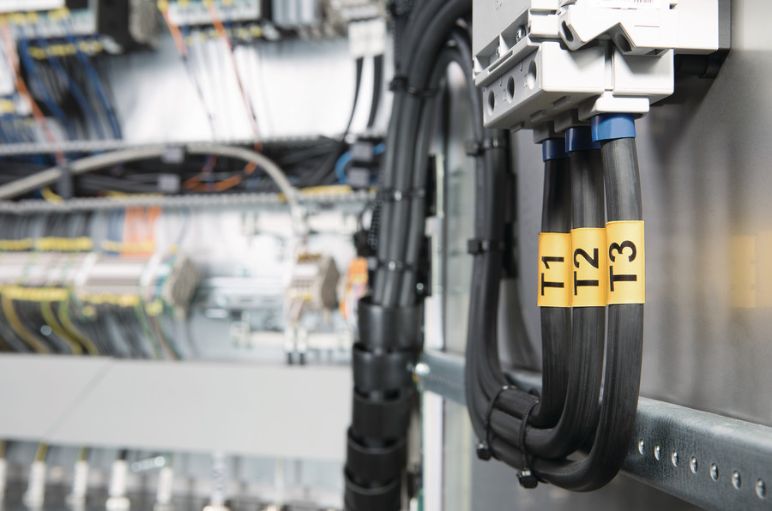
Cable identification is important in HVAC systems because maintenance teams need to identify cables, circuits, sensors, actuators and control connections quickly and safely. Clear marking reduces troubleshooting time and prevents wiring errors during service work.
For example, the thermal-transfer printable identification tag TIPTAG11X65BU is halogen-free, has low smoke propagation and toxicity, includes fastening slots for cable ties and is suitable for retrofit applications. It can be used for larger wires and cable bundles in HVAC wiring.
TULT heat shrink markers can be used for identification in high-stress environments as they offer good mechanical strength, resistance to organic solvents and chemicals, and high flexibility.
Want to learn more about our HVAC solutions? In this brochure, you can discover our products in greater detail and explore the wide range of solutions available across our HVAC portfolio.
Flexible corrugated conduits are often suitable for HVAC cable protection because they allow cables to be routed through compact spaces while protecting them from abrasion, vibration and mechanical stress. The best conduit depends on the installation area, required flexibility, temperature exposure, mechanical load and whether the application is indoors or outdoors.
Cable ties for HVAC applications should be selected according to the installation environment. For outdoor heat pumps or exposed areas, UV-resistant cable ties are recommended. For areas with elevated temperatures, heat-stabilised cable ties can provide better long-term performance. In vibration-prone HVAC equipment, heavy-duty cable ties offer best results.
Cables in HVAC systems can be protected from moisture by using suitable insulation, such as heat shrink tubing around sensitive areas such as cable joints or terminations. This is especially important in heat pumps and HVAC units where condensation, outdoor exposure or temperature changes may occur.
Cable damage in vibration-prone HVAC equipment can be reduced by securing cables with appropriate cable ties, clips, mounts and protective conduits. Flexible conduits, protective sleeving, edge clips, and heavy-duty cable ties can help keep wiring fixed and protected in areas exposed to vibration, airflow, or mechanical stress.
Cable management for HVAC wiring supports system reliability by keeping wiring securely fixed, protected and organised. This reduces the risk of loose connections, abrasion, short circuits, overheating issues and moisture-related faults. It also makes inspection and maintenance easier, helping to reduce downtime and service costs.
Important heat pump wiring requirements include secure cable fixation, reliable separation of wiring, mechanical protection, moisture protection and clear cable identification. The exact electrical requirements depend on the unit type, installation environment and local standards, but cable management can support safe, organised and service-friendly routing.
Cable management does not replace the electrical design of thermostat wiring for a heat pump, but it helps keep control wiring clearly routed, identified and protected inside HVAC units or control areas. This can support easier maintenance and reduce the risk of wiring errors during service work.
Clear routing is important for HVAC thermostat wiring because control cables, sensors and connection points need to remain easy to identify during installation, inspection and maintenance. Cable markers, labels and structured routing can help technicians trace wiring more efficiently and reduce troubleshooting time.
Ratchet clips and Omega mounting clips offer several advantages over traditional cable ties when it comes to HVAC and heat pump wiring: