Visit the website for your country to get more information and discover our products.
 Argentina
 Australia
 Brazil
 Bulgaria
 China
China Czech Republic
 Denmark
 Finland
 France
 Germany
 Hungary
 India
India Italy
Italy Netherlands
 North America
 Norway
 Poland
 Portugal
 Romania
 Singapore
 Slovenia
 South Africa
 South Korea
 Spain
Spain Sweden
 Switzerland
 Thailand
 Türkiye
 United Arab Emirates
 United Kingdom
22/10/2026

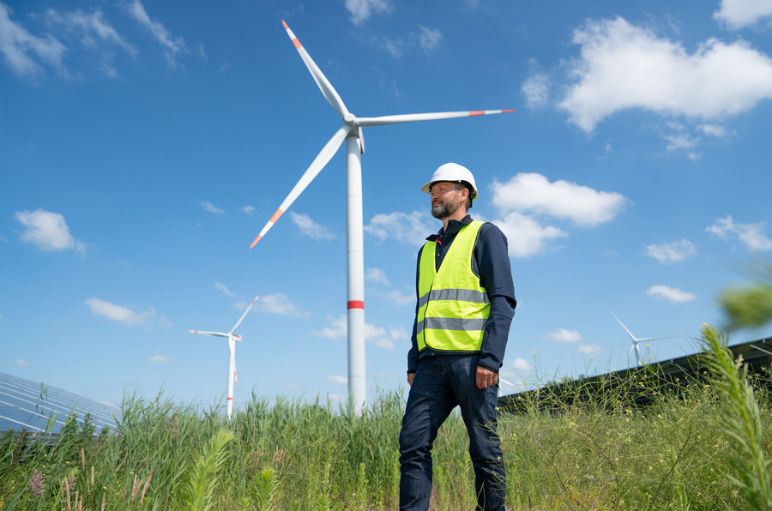
Alongside photovoltaic and hydroelectric power sources, wind farms have rapidly become one of the chief suppliers of renewable energy many countries. As the importance of wind power increases, so too do the demands on the performance and reliability of wind turbines. HellermannTyton offers cable management solutions for wind turbines that help operators meet this challenge.
Wind turbine cable installation must account for enormous strain because the rotor blades must constantly face into the wind to efficiently generate power. Protecting and maintaining the critical cables connecting the generator outlet in the rotating nacelle with the grid inlet below is paramount.
The so-called loop – the connection running from the generator into the tower – is a critical area of wind turbine cable installation exposed to constant twisting forces. The cable grips commonly used to suspend the loop can fray, which in turn can rub and damage the cable insulation. The cable sheathing is subjected to considerable movement as the cables twist around each other in the loop. In worst case scenarios they can break.
Damage to the cable not only reduces the output of the facility, but costly repairs may also be required. Replacement of a single loop cable can cost two man-days. However, cable wear and tear caused by friction or heat can be counteracted with the application of cable protection sleeves for wind turbines.
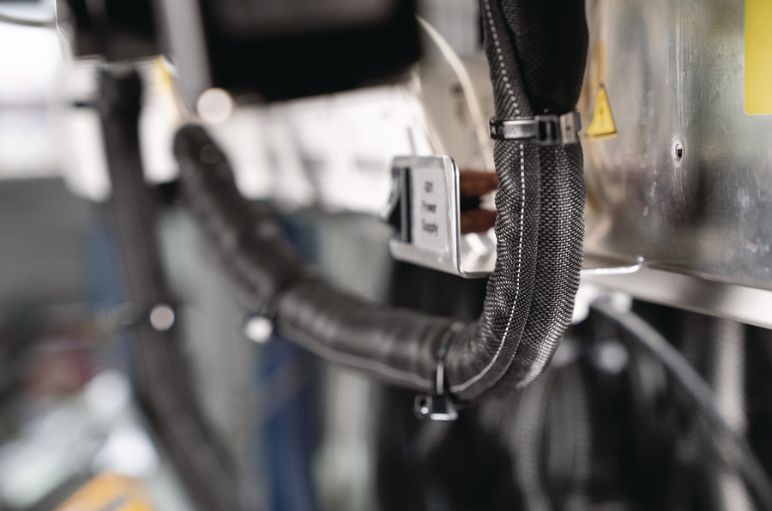
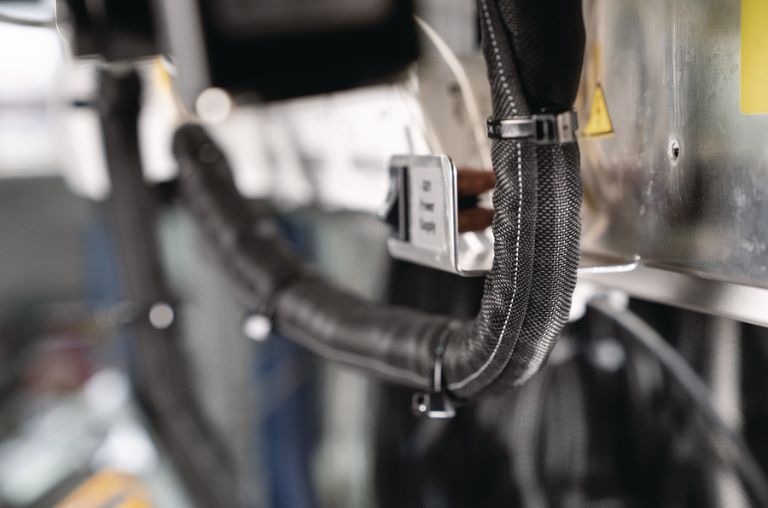
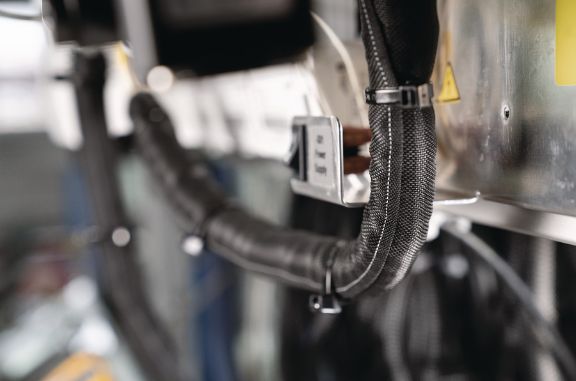
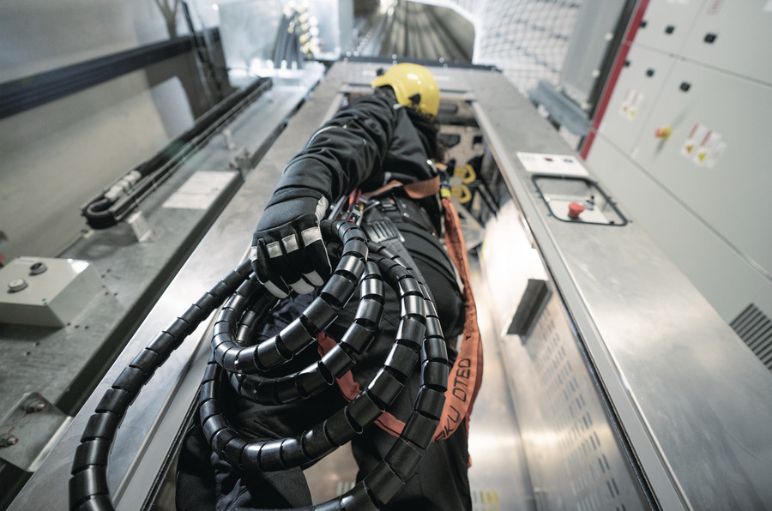
Whenever the forces of torsion wreak havoc and wherever the lifespan of power cables is limited by friction, that is where HellermannTyton comes in with Helagaine Twist-In, a power cable sleeve for cable protection in wind turbines. If torsion arises in a bundle, the individual cables will be protected. This abrasion-proof, self-closing cable sleeve is a cable management solution for wind turbines which extends operational lifespan and significantly reduces repair frequency.
Inside a wind energy plant, cables connecting the generator in the nacelle to the tower base experience constant twisting as the nacelle rotates to face the wind. This can lead to abrasion and insulation damage over time. Helagaine Twist-In provides a protective sleeve that significantly reduces wear and tear, extending cable life and reducing maintenance costs of smart cable management for wind turbines. This is crucial not only for onshore systems, but also for offshore cable installation, where maintenance access is more challenging.
By reducing cable damage and maintenance frequency, this cable sleeve helps operators keep operational costs low and improve turbine reliability. It saves time during assembly and retrofitting, which is important for large-scale wind projects.
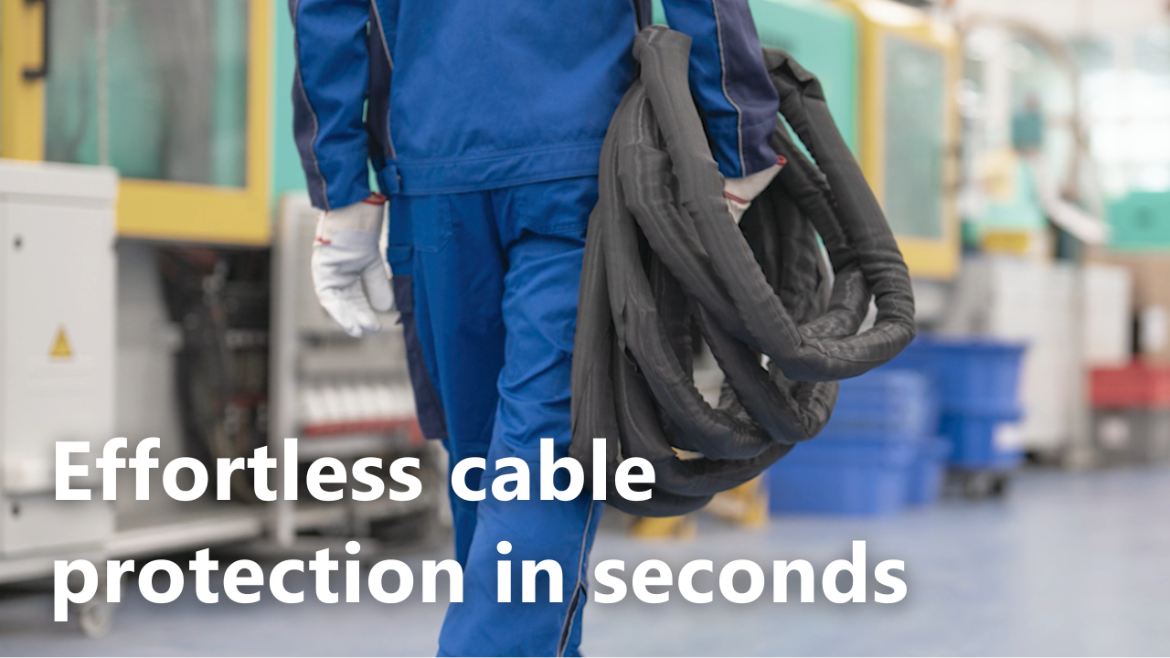
Since friction can shorten the lifespan of power cables, they require special protection in wind turbines due to torsional stress. This video demonstrates how the abrasion-resistant, self-closing cable sleeve extends operational life and significantly reduces repair frequency.
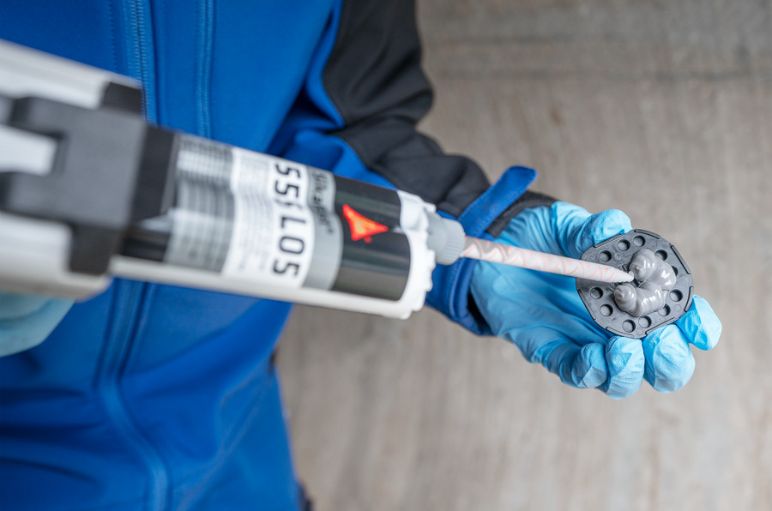
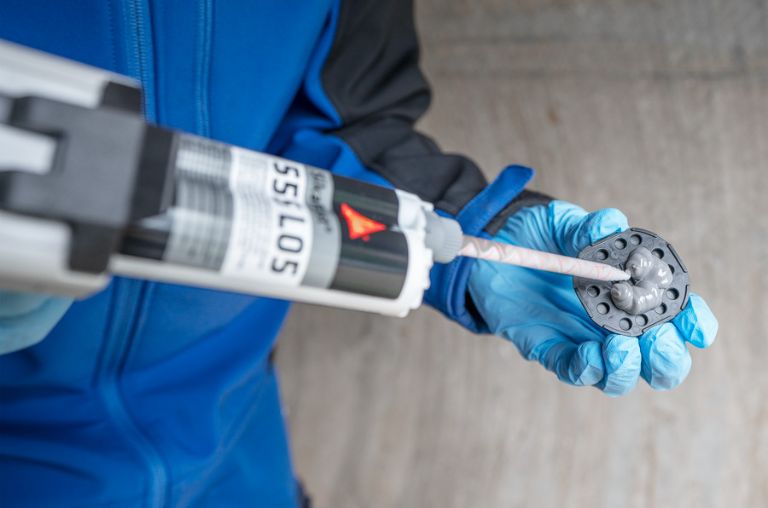
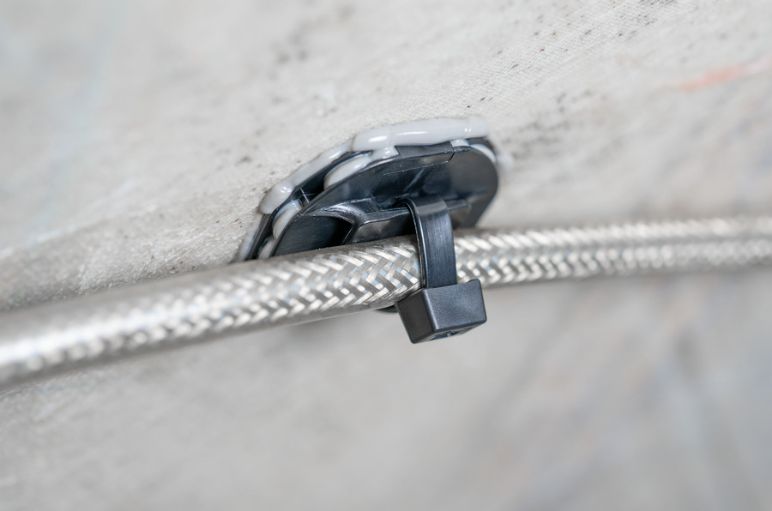
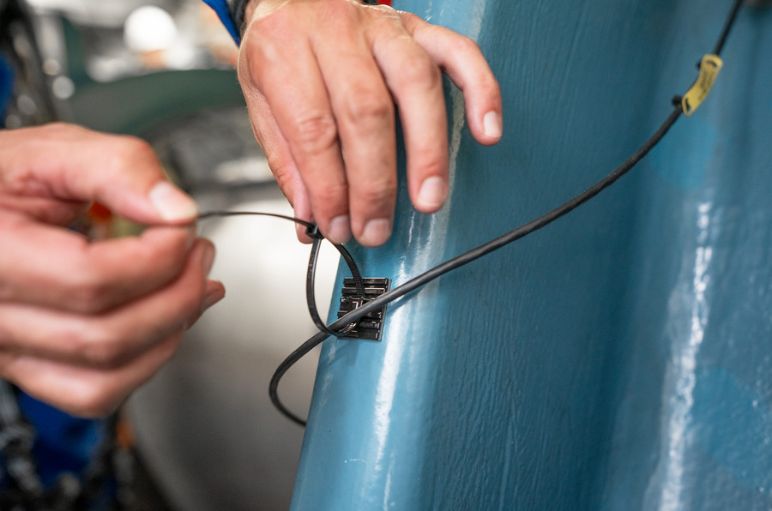
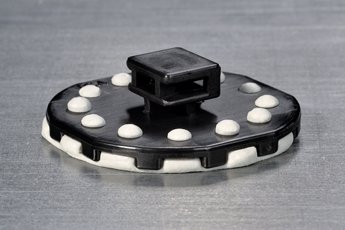
HellermannTyton engineered a cable tie mount for smart cable management in wind turbines which allows the condition monitoring wiring harness to be attached directly to the gearbox housing. The design of the mount with two-component adhesive is highly adaptable, with tolerance for various surface types, including rough and curved areas, allowing for easy placement across nearly any part of the gearbox. This wind turbine cable installation solution makes the production chain more flexible and efficient. Additionally, the mounts can be universally applied, so production complexity for cable routing in wind turbines is significantly reduced and costs can be lowered.

When screw fixing is not an option, the PMB paste mount delivers a reliable solution. This video shows how Its innovative design allows easy installation on uneven surfaces, ensuring a secure hold without causing damage. Compatible with paste and liquid adhesives, this mount keeps your structures intact while providing lasting stability.
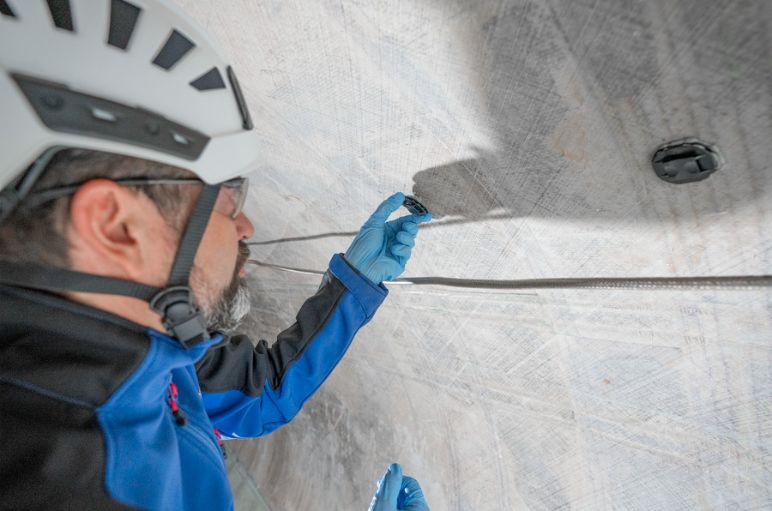
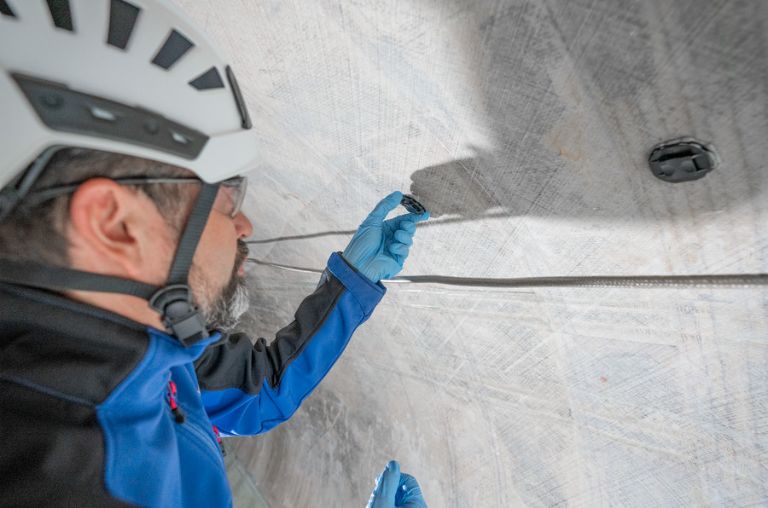
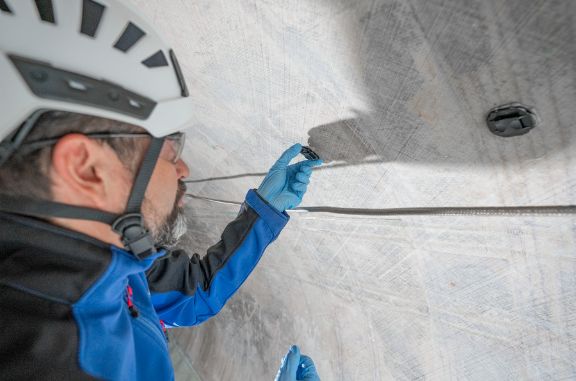
In highly dynamic application, such as rotor blades of wind turbines, the surface can bend slightly and requires a mounting solution that will not break. The PMB cable tie mount deploys a highly flexible adhesive, leading to a structural integrity advantage over rigid mounting solutions.
Find out in depth why PMB mounts are a great fixing solution for cable routing in wind turbines in this white paper.
Discover the key insights in this white paper:
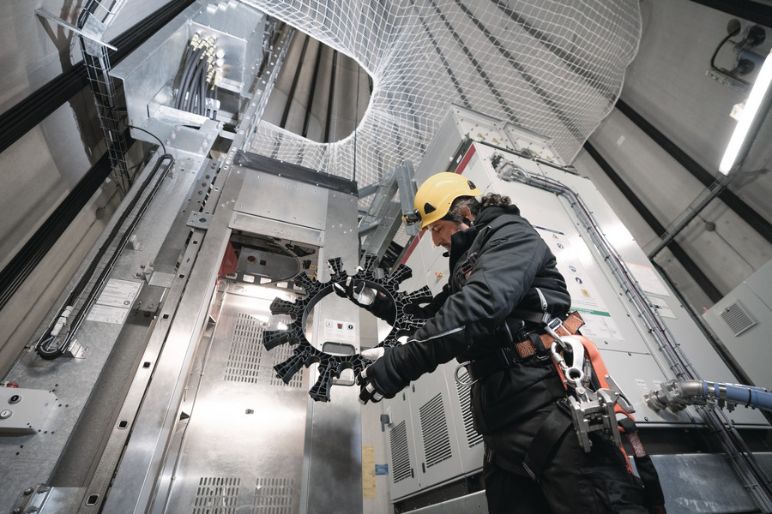
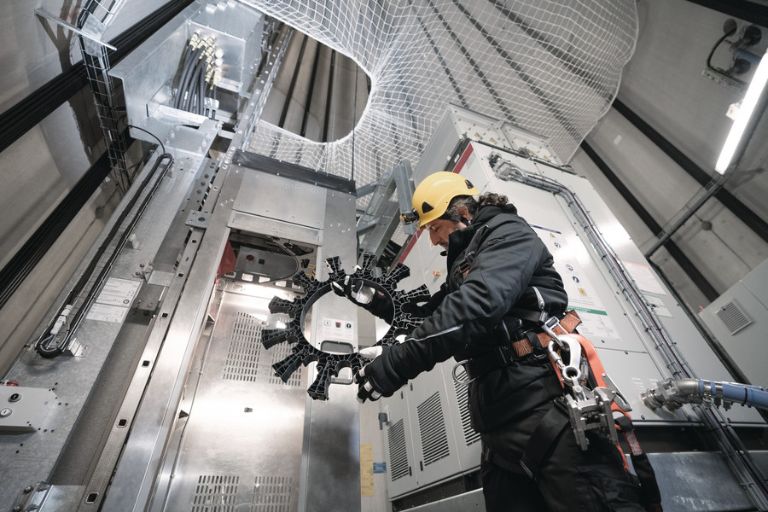
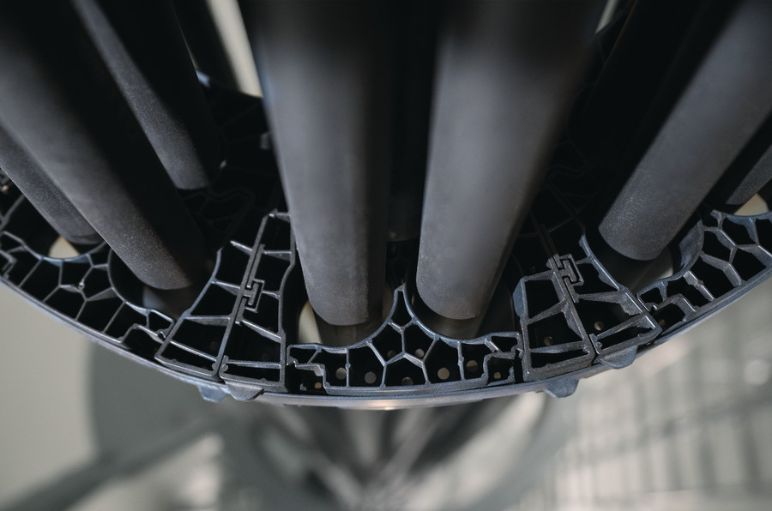
Loop spacers play a vital role in wind turbine cable management. Located in the cable loop between the nacelle and tower, they keep power and control cables properly spaced to prevent abrasion and mechanical stress during nacelle rotation.
By reducing friction and torsional strain, loop spacers extend cable life and minimise maintenance in renewable energy wind turbines. They also improve airflow for better heat dissipation, ensuring reliable performance under high torsion cycles. Easy to install and highly durable, loop spacers are essential for protecting cables in demanding wind energy environments, contributing to turbine efficiency and long-term operational safety.
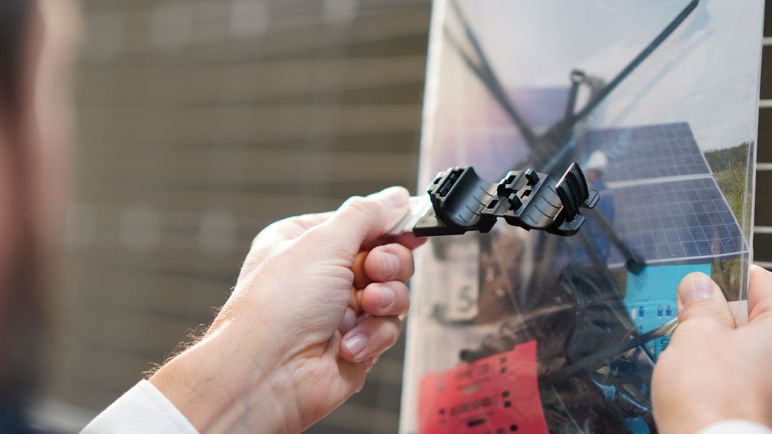
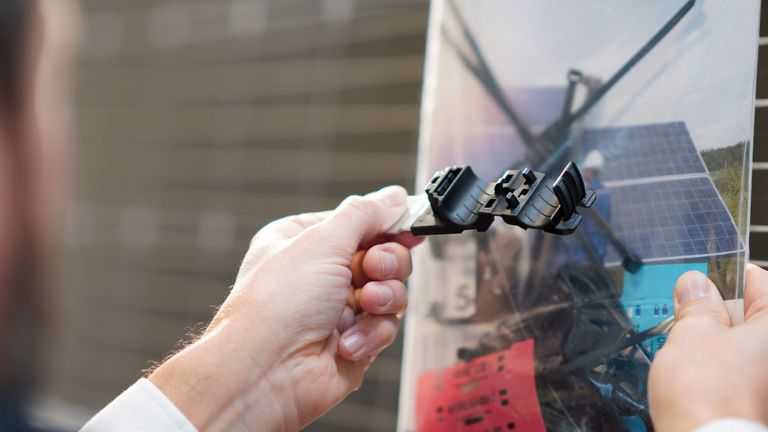
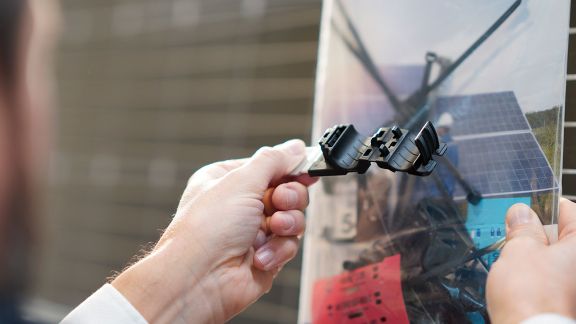
HellermannTyton offers a free sample pack for cable management solutions in wind turbines. This allows for trying the products out on-site and discovering how parts especially designed for wind power plants improve the efficiency of wind turbine cable installations.
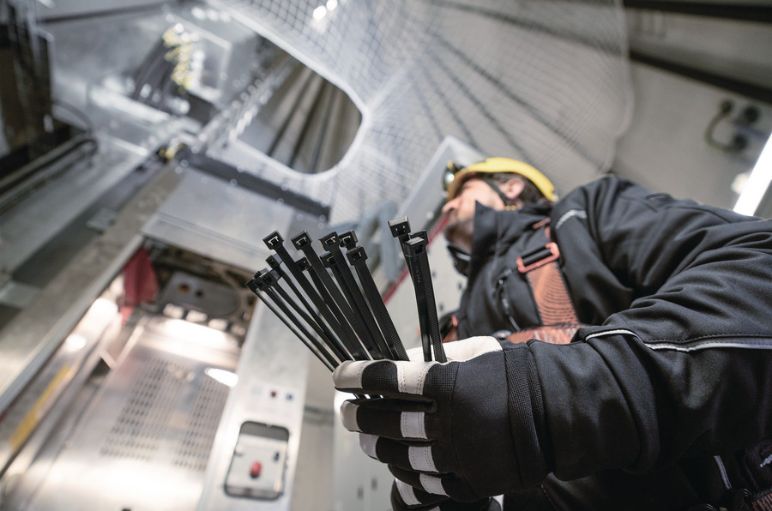
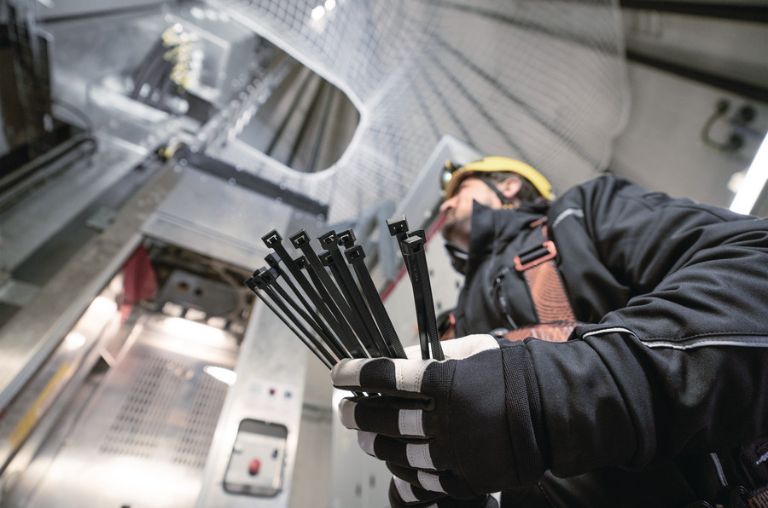
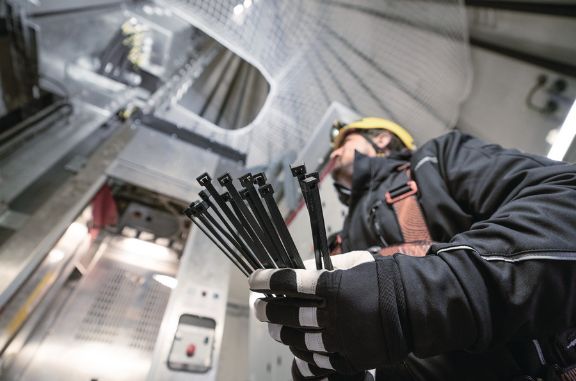
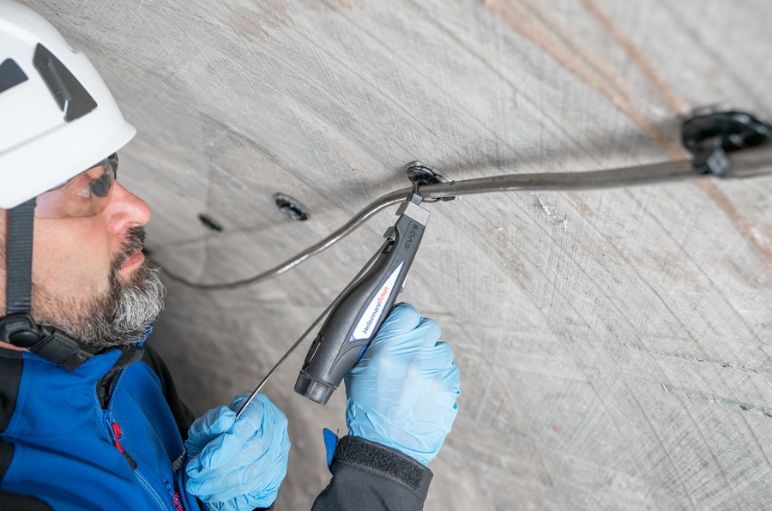
Installation and maintenance are critical factors in onshore and offshore wind farm cable installation. Choosing the right cable ties and fixings for cable management in wind turbines is critical because the components must withstand extreme environmental conditions, mechanical stress, and long service life requirements.
For example, key factors to consider when choosing cable ties are material, temperature range, tensile strength and overall environmental resistance such as resistance to UV radiation, vibration, moisture, oils, and chemicals. Mounting solutions should offer drilling-free installation and cushioning for reduction of abrasion damage. HellermannTyton offers an eLearning about cable ties and fixings for cable management in wind turbines.
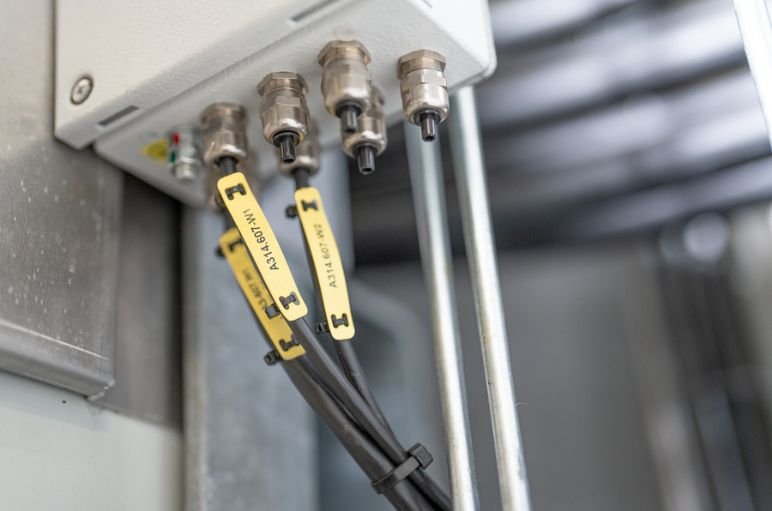
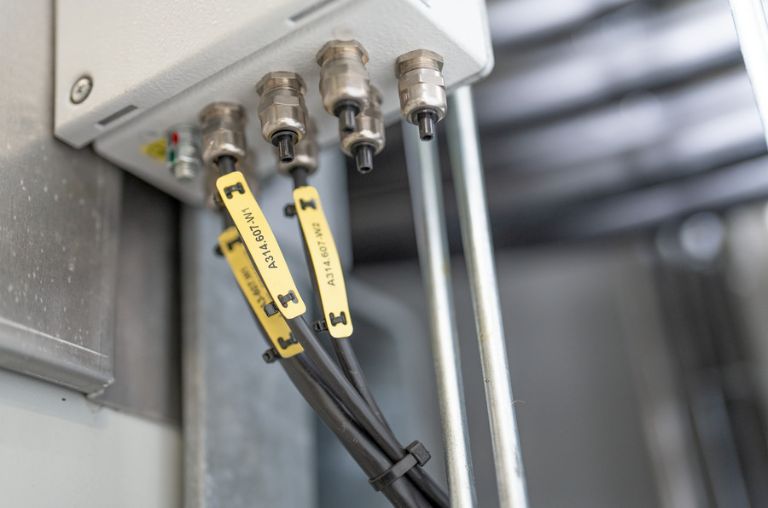
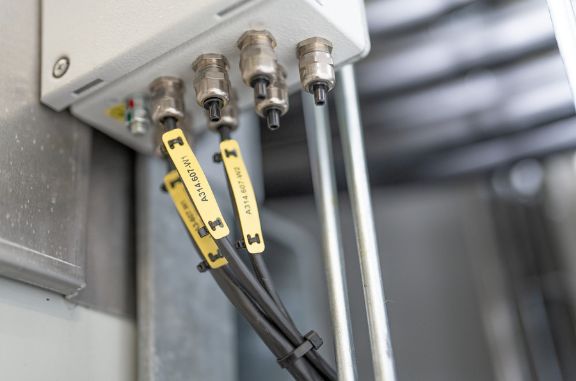
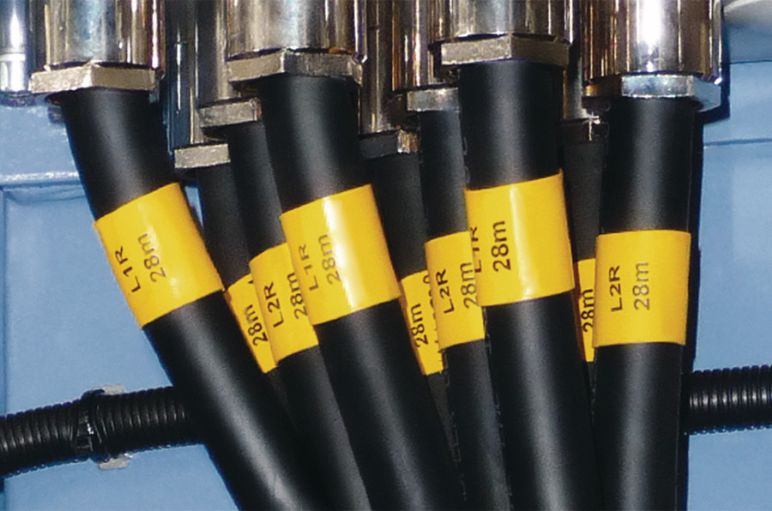
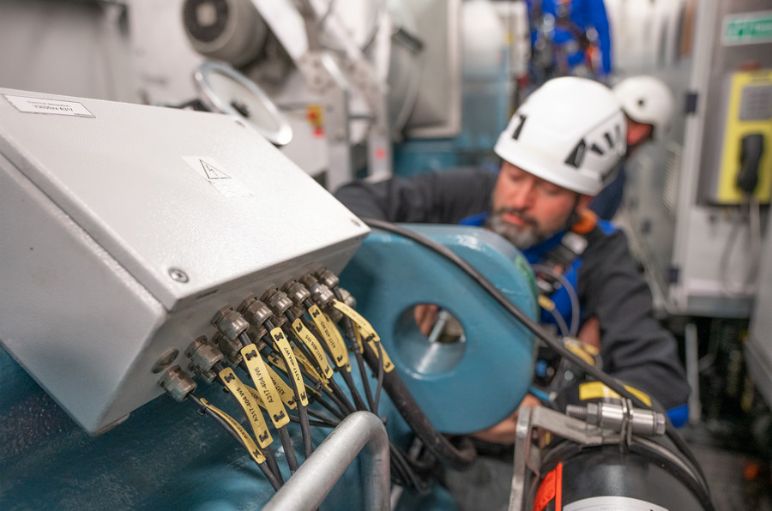
Effective cable and asset identification is critical for wind power plant operations. Traditional rigid markers often pose challenges because they are difficult to adapt to the varying cable diameters and configurations inside turbines. HellermannTyton offers many options for identification in wind power stations, including shrinkable markers, which provide a secure fit and clear labelling even in tight spaces.
Proper identification also supports streamlined asset maintenance. By eliminating paper-based systems and adopting digital tracking, operators can avoid equipment loss and ensure accurate records. This approach minimises downtime, improves traceability, and enhances overall reliability in wind energy plants.

Marking and identification in wind turbines are not just about labelling – they are essential for safety, regulatory compliance, efficient maintenance, and cost optimisation throughout the turbine’s lifecycle. This video shows how clear labelling ensures technicians can quickly locate and service components, reducing downtime and preventing costly errors.
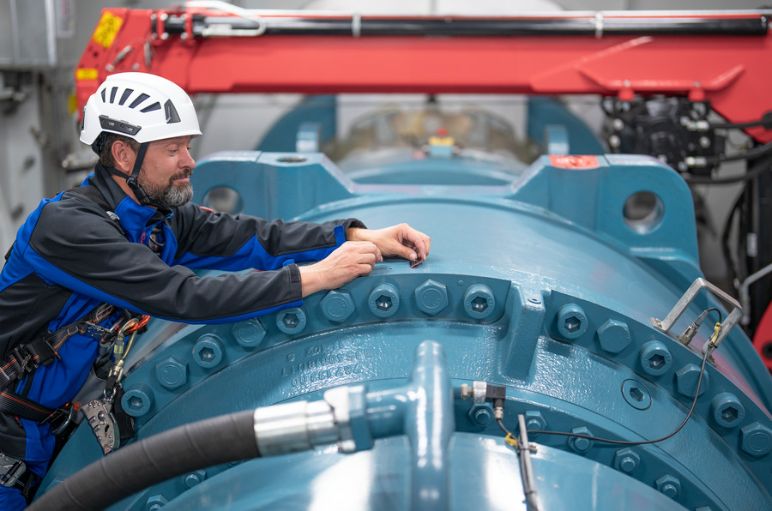
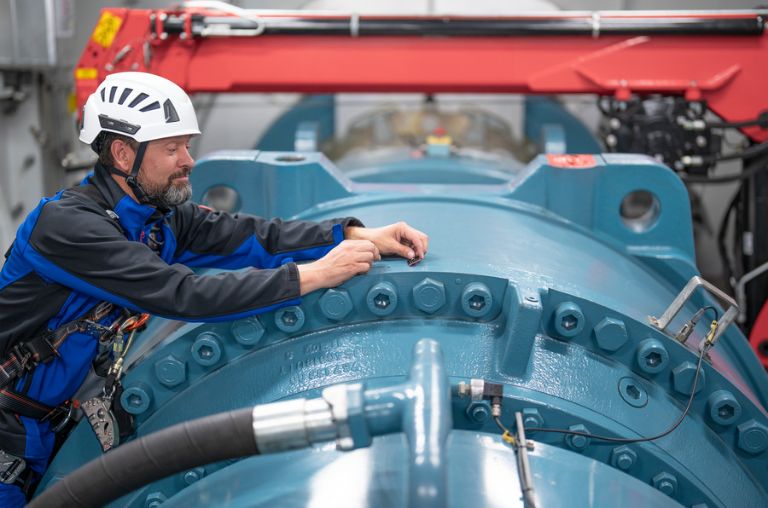
Achieve cost savings for cable management in wind turbines: solutions to save structural mass and minimise installation times in wind turbines. HellermannTyton offers a webinar explaining how the correct cable management products for nacelle, tower, hub, and blades can reduce maintenance, increase yield and optimise costs.
Find out how products for wind farm cable installation contribute to the Levelized Cost of Energy (LCOE) and what solutions help minimise cost in wind turbine cable installation.
Georg Neureiter is an expert in cable management solutions for renewable energies. In this webinar he takes you through ways in which solutions from HellermannTyton help you minimise cost in wind installations. From breaking down CAPEX, OPEX, and yield to showcasing real product examples, this webinar gives insights needed to make smarter decisions for wind turbine cable management.
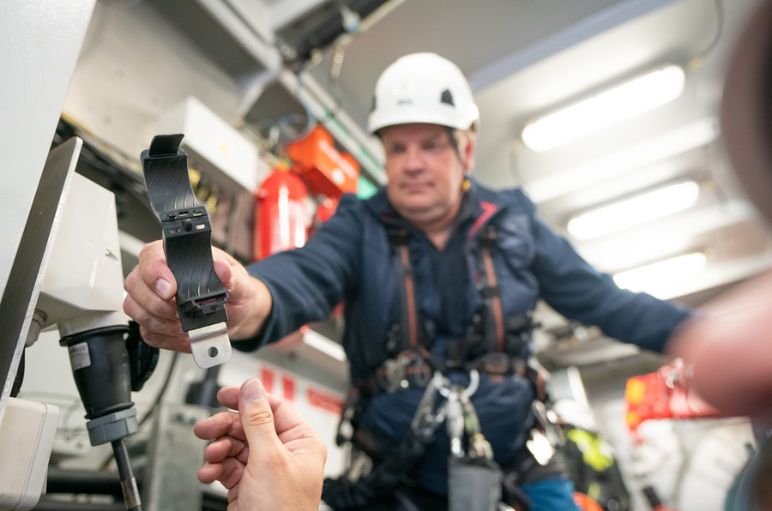
Manufacturers of wind turbines often outsource C-parts such as cable ties, clips and protective sleeves as using standardised parts reduces costs and frees up resources for core competencies. When designing the cable management for wind turbines – nacelles, towers, or hubs – engineers integrate these components into their CAS models. For this, they need accurate CAD data. HellermannTyton has made the 3D and 2D CAD data of thousands of products available free of charge.
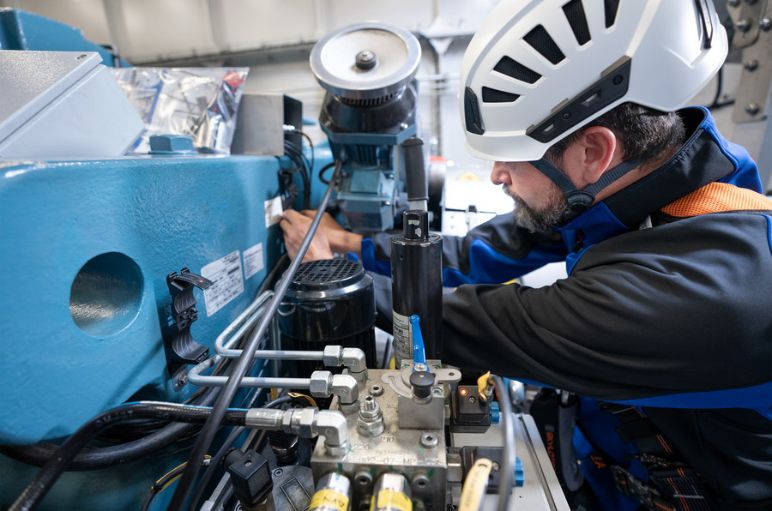
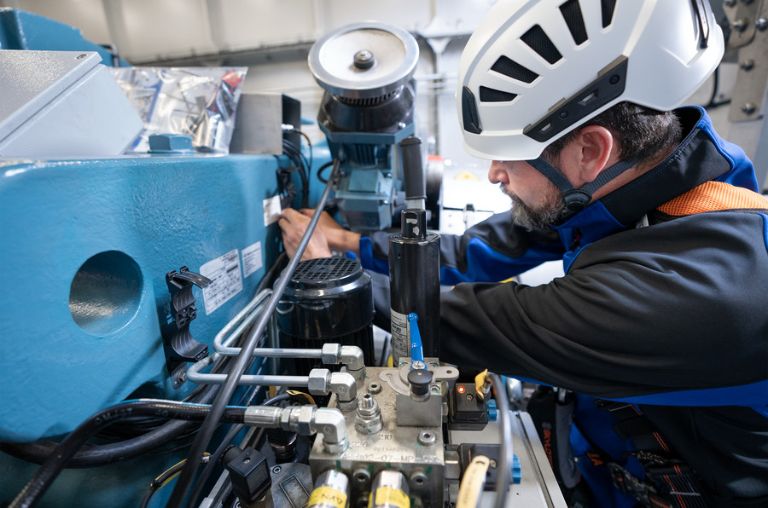
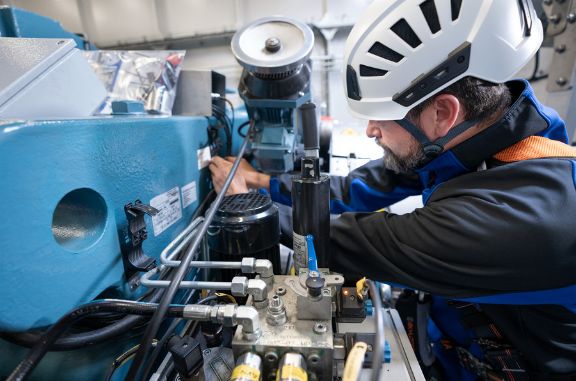
Nacelles present a demanding environment for wind turbine cable installation. They contain complex cable networks in confined spaces exposed to high temperatures. Many components, such as the main machine carrier and rotating hub, have curved surfaces, making it difficult to secure cables using traditional methods. Conventional solutions like pre-bent rods and drilled brackets are not only costly but also logistically complex and pose safety risks for technicians during installation. Additionally, rotating hubs and remote components such as yaw and pitch drives add further complications. Leaving cables hanging freely is not an option, as it creates hazards and compromises operational reliability.
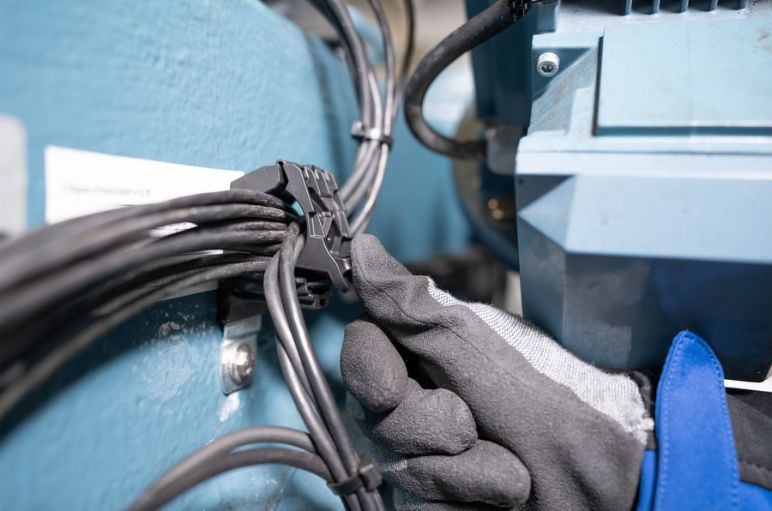
HellermannTyton partners with wind energy manufacturers to solve these complex wind turbine cable installation challenges – one example for a successful partnership is the Ratchet P-Clamp system. This cable clamp secures cable routing in wind turbines using existing mounting points, eliminating the need for custom brackets. Other features include soft silicone inserts for cable protection, integrated saddles for additional ties, and a vibration-resistant design. This cable installation solution for wind turbines is quick, non-destructive, and clamps are reusable.
This innovation delivers significant benefits: reduced production and maintenance costs, improved operational reliability, and enhanced technician safety. By simplifying cable management for wind turbines and minimising downtime, RPCs help lower the Levelized Cost of Energy (LCOE) for operators.
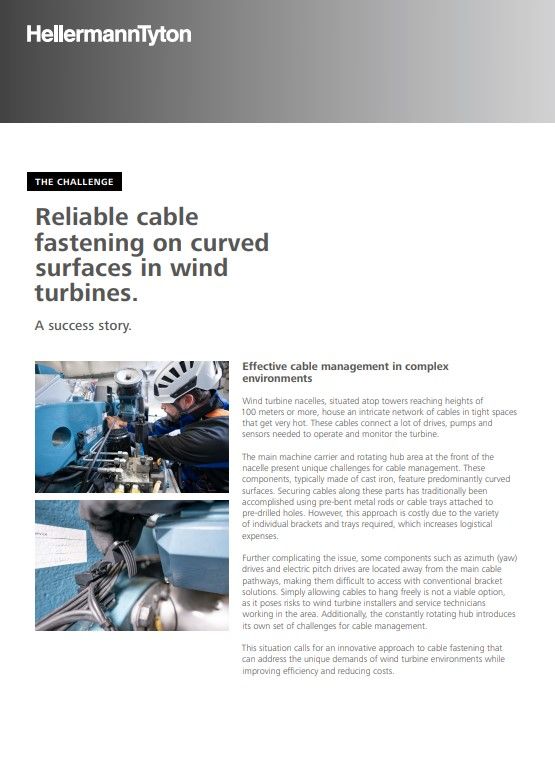
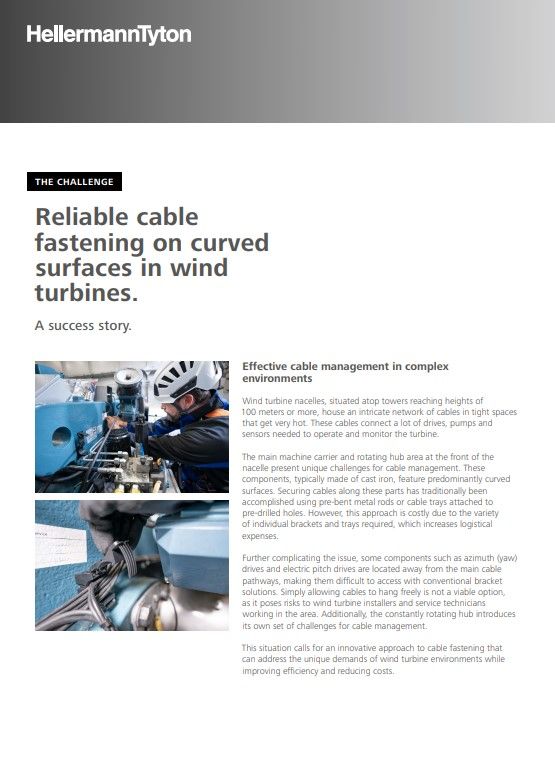
Nacelles are a tough environment for cable routing – confined spaces, high temperatures, and rotating components make traditional methods costly and risky. Learn how HellermannTyton’s Ratchet P-Clamp system solves these challenges with quick, safe, and reusable solutions in this success story.
Discover the key insights in this success story:
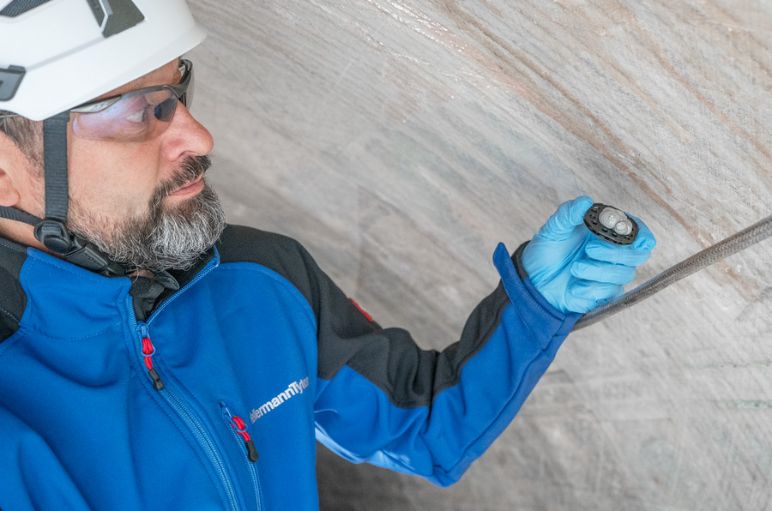
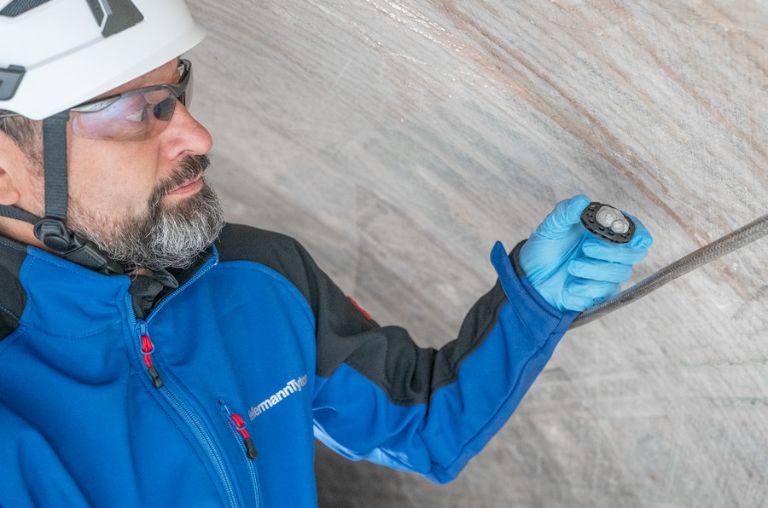
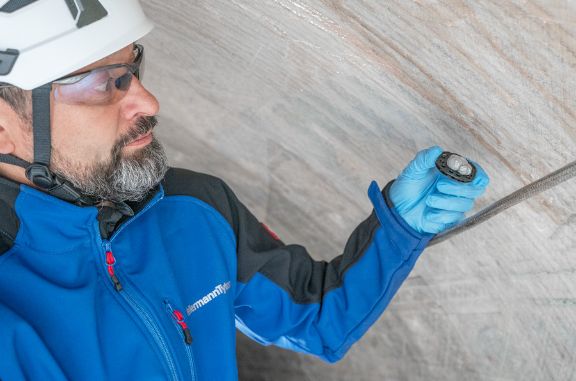
Wind turbine manufacturers face constant pressure to enhance efficiency and reduce cost. Once critical area is condition monitoring of key components, such as gearboxes in the drive train of the wind turbine. Traditionally, the monitoring system’s wire harnesses are secured using welded, hot-dip galvanised steel cable guides. However, these cable guides are costly, prone to quality control issues, and difficult to install.
Especially the risk of over-drilling and the weakening of the housing structure, slowed down production and increased the need for rigorous quality inspections. That is why a customer approached HellermannTyton with a request to find a more efficient wind farm cable installation solution to reduce the dependence on a growing number of different steel cable guides needed for various gearbox models in wind turbines.
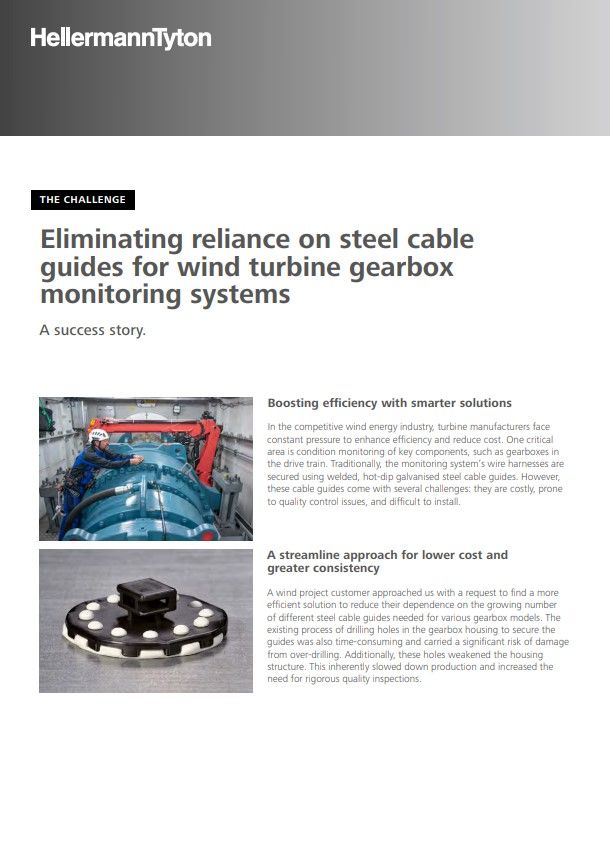
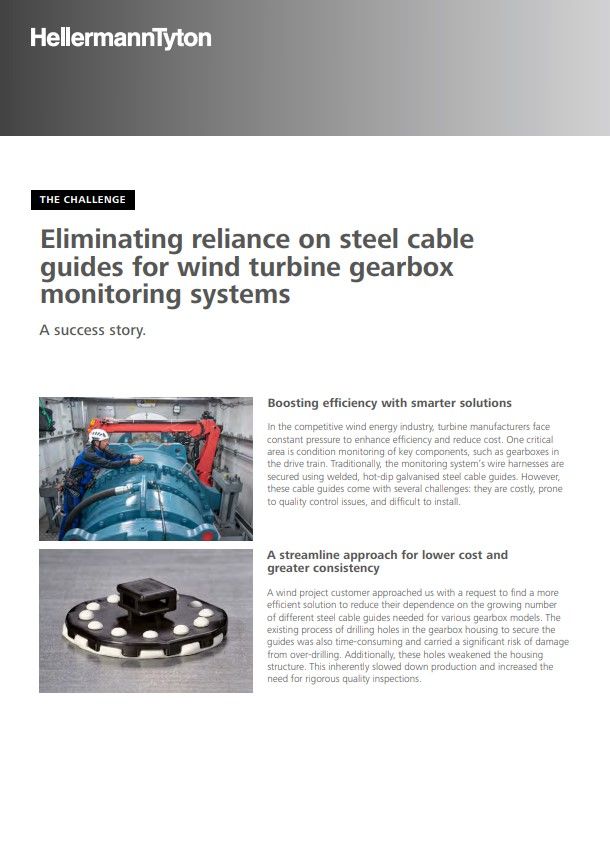
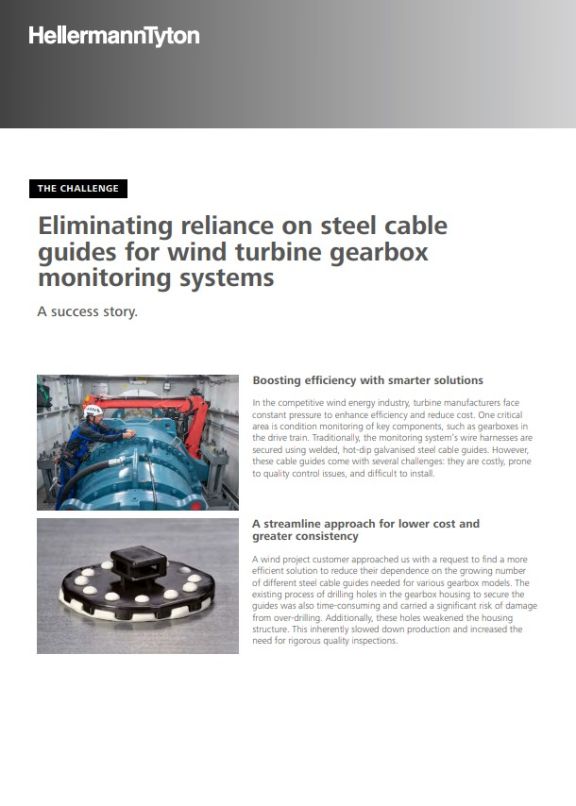
Traditional steel cable guides for condition monitoring are costly, hard to install, and risk structural damage. Discover how HellermannTyton helped a leading manufacturer replace welded guides with a smarter, safer, and more efficient solution in this success story.
Discover the key insights in this success story:
One of the main challenges of cable management in wind turbines is dealing with the constant movement and rotation of the nacelle, which can cause cable twisting and wear over time. Limited space inside the tower and nacelle makes routing cables efficiently without interference difficult. Additionally, harsh environmental conditions such as moisture, temperature fluctuations, and vibration increase the risk of insulation damage and connector failures.
To ensure proper bend radius and strain relief in wind turbine cable management, cables should be routed using guides or clamps that maintain the manufacturer’s minimum bend radius to prevent conductor damage. Strain relief is achieved by securing cables at transition points and using releasable clamps or grommets to absorb mechanical stress from vibration and wind loads.
To prevent vibration damage in wind turbines, cables should be secured with flexible clamps or brackets that allow slight movement without creating stress points. Protective tubing or smooth surfaces should be used to avoid abrasion from constant vibration. Routing cables through trays or conduits and applying proper strain relief at transition points helps distribute mechanical loads evenly.
To protect cables from moisture and corrosion in offshore wind farms, use UV-resistant and weatherproof sheathing combined with sealed conduits or enclosures to prevent water ingress. Stainless steel cable ties with protective coatings are recommended to resist saltwater exposure and avoid galvanic corrosion between dissimilar metals. Additionally, heat-shrink tubing with adhesive lining and corrosion-resistant materials help maintain insulation and mechanical integrity under harsh marine conditions.
Cable movement caused by rotor rotation in wind turbines is managed by using flexible cable mounts and abrasion protection systems that allow controlled movement without damaging insulation. Adhesive-based solutions like PMB mounts are ideal for curved or composite surfaces inside blades, as they maintain structural integrity under dynamic loads. Additionally, protective tubing and spiral wraps help prevent friction and wear.
Cable movement caused by rotor rotation in wind turbines is managed by using flexible mounts, abrasion-resistant tubing, and spiral wraps that allow controlled motion without damaging insulation. Adhesive-based mounts like PMB are often applied to curved or composite surfaces inside blades to maintain stability under dynamic loads. For offshore cable solutions, specialised products such as UV-resistant cable ties, stainless steel fasteners, and weatherproof conduits are used to withstand harsh marine conditions and prevent corrosion.