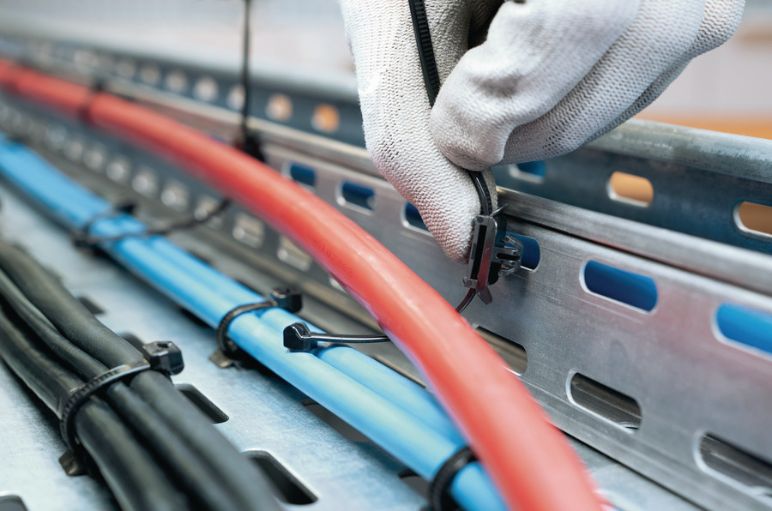
Visit the website for your country to get more information and discover our products.
 Argentina
 Australia
 Brazil
 Bulgaria
 China
China Czech Republic
 Denmark
 Finland
 France
 Germany
 Hungary
 India
India Italy
Italy Netherlands
 North America
 Norway
 Poland
 Portugal
 Romania
 Singapore
 Slovenia
 South Africa
 South Korea
 Spain
Spain Sweden
 Switzerland
 Thailand
 Türkiye
 United Arab Emirates
 United Kingdom
20/10/2026

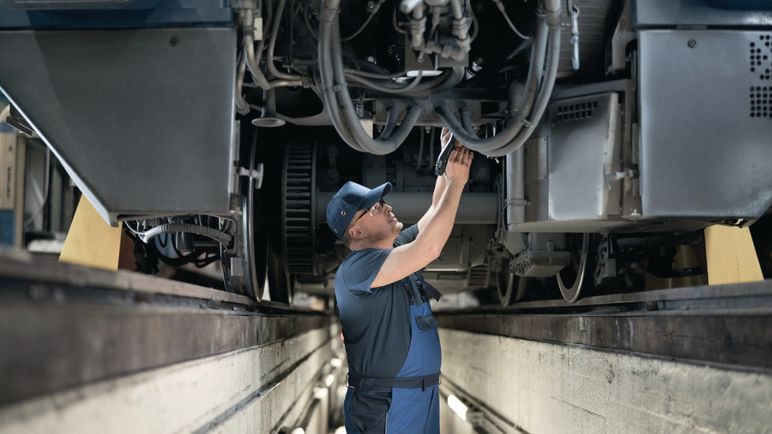
HellermannTyton provides comprehensive cable management solutions for the rail industry, supporting the rolling stock manufacturers in the transport sector. Our components are engineered for use throughout rolling stock, where bogies, rooftops and underbody areas are continuously exposed to vibration, temperature fluctuations, UV, and strict fire‑safety requirements.
Certified by the International Railway Industry Standard (IRIS), HellermannTyton is recognised as one of the trusted rail industry suppliers, providing safe, efficient and economically sustainable solutions for rail industry cable management. Strong innovation capabilities ensure that all products meet evolving regulatory, environmental and technical demands.
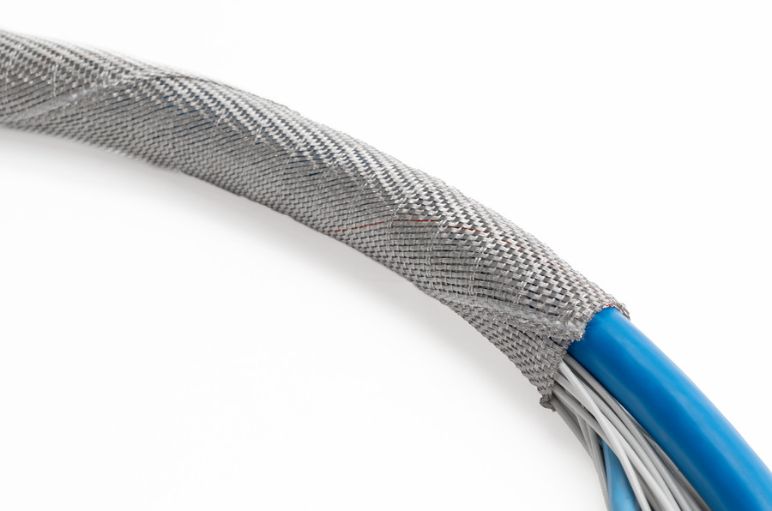
For instance, in many railway installations, increasing signal density and tighter spaces raise the risk of electromagnetic interference. To support reliable power, data and signalling transmission, HellermannTyton developed a self‑closing EMI‑shielding sleeve EMIZ to allow cables to be shielded efficiently throughout rolling stock and rail infrastructure, even in confined or vibration‑exposed areas as well as an efficient grounding device.
Beyond rolling stock, HellermannTyton cable management for railway installation offers:
security along railway tracks and support of accident‑prevention measures, where components must withstand weather changes, mechanical stress from passing trains and strict safety regulations
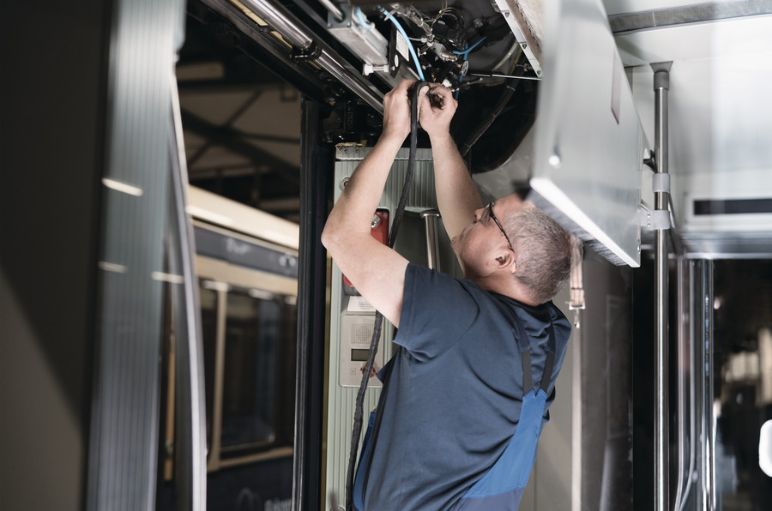
Certified cable management components for the rail industry are essential to building safe and reliable trains. EN 45545 defines the fire safety requirements that all components in rail vehicles must meet, including limits for fire protection, smoke density and toxicity. Most rolling stock applications demand compliance with Hazard Levels HL2 or HL3, which is why certified railway cable management components are now essential throughout the industry.
For railway manufacturers, small components such as cable ties, markers, heat shrink tubing and conduits are used in large quantities and across many installation points – from passenger cabins to bogies, rooftops, and underfloor areas. To ensure consistent safety and avoid non-compliant materials, rail OEMs typically require EN 45545 cable management throughout the vehicle. This approach ensures safety consistency and reduces the risk of non-compliant materials entering critical applications.
HellermannTyton offers a wide range of EN 45545 railway components. These solutions for cable management in the rail industry support safe, efficient installation both inside and outside the vehicle, even under vibration, temperature changes and mechanical stress.
This eLearning on EN45545 railway standard gives more information on requirements for fire behaviour of materials and components in rolling stock, when non-certified products can be used, grouping rules, calculating weight, test measures and parameters to determine risk level.
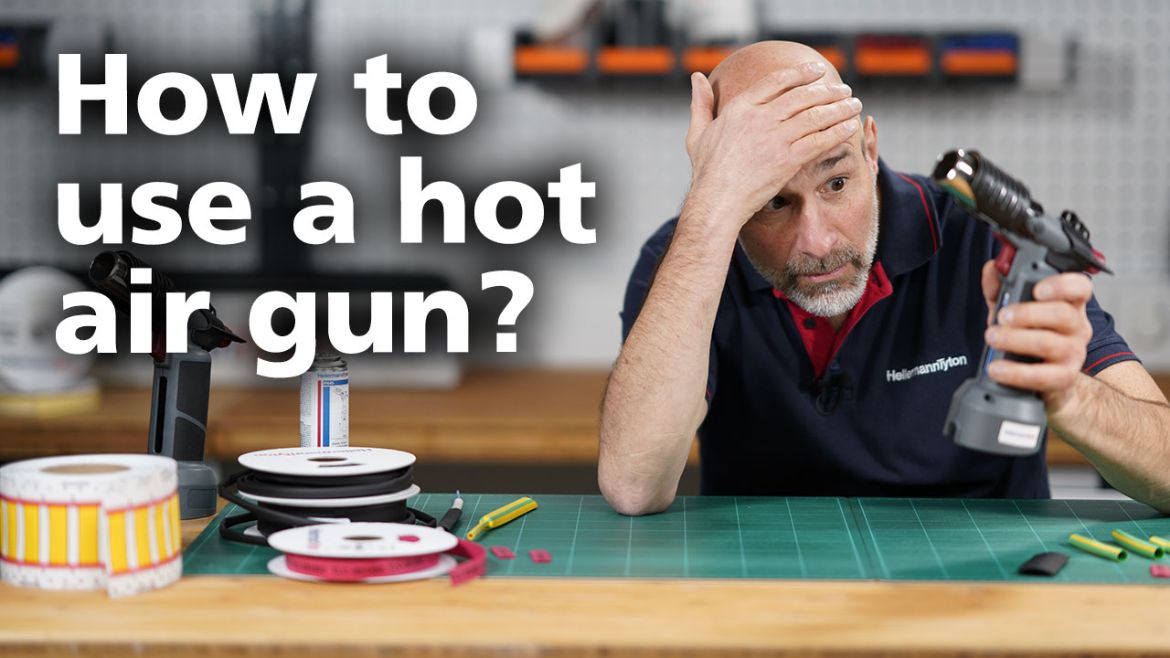
The CHG900 heat gun offers several advantages that make it highly suitable for heat shrink tubing and labelling in the rail industry. Its cordless operation is a major benefit in depots, on tracks, and inside rail vehicles, where access to fixed power outlets is often limited or impossible. Technicians can work autonomously for up to 90 minutes with a single gas cartridge, ensuring continuous operation in remote or hard‑to‑reach environments such as trackside installations, tunnels, undercarriages of rolling stock, cable ducts, maintenance pits, or elevated rail viaducts.
Safety is a critical requirement of cable management in the railway industry, and the CHG900’s flameless hot-air technology significantly reduces fire risk compared to open‑flame tools. Conformity with EN 45545 further ensures that the device meets stringent railway fire protection standards, making it suitable for use in cable management of rolling stock and rail infrastructure.
Its lightweight, ergonomic design allows technicians to work comfortably even during extended maintenance periods, and the tool can be operated in any direction for maximum flexibility - an essential benefit when working in tight cable compartments, underbody areas, or elevated roof zones. The integrated standing pad also enables hands‑free working, which is particularly valuable when handling heat shrink tubing, cable markers, moulded shapes, end caps, or repair sleeves for railway/rolling stock.
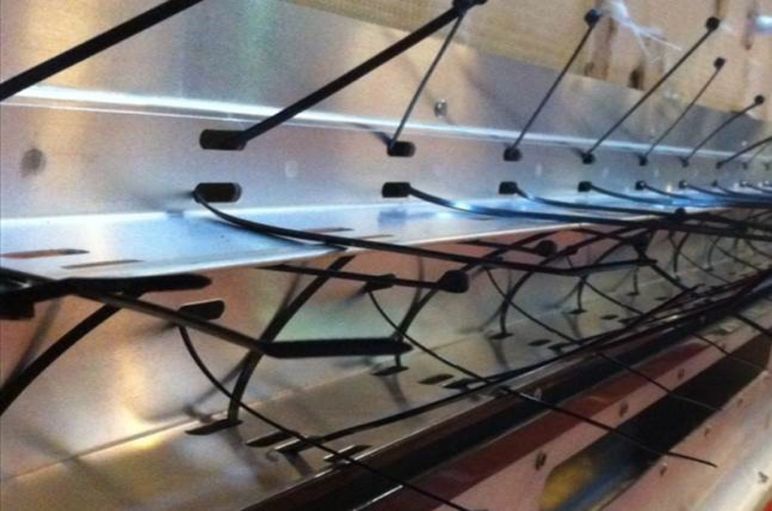
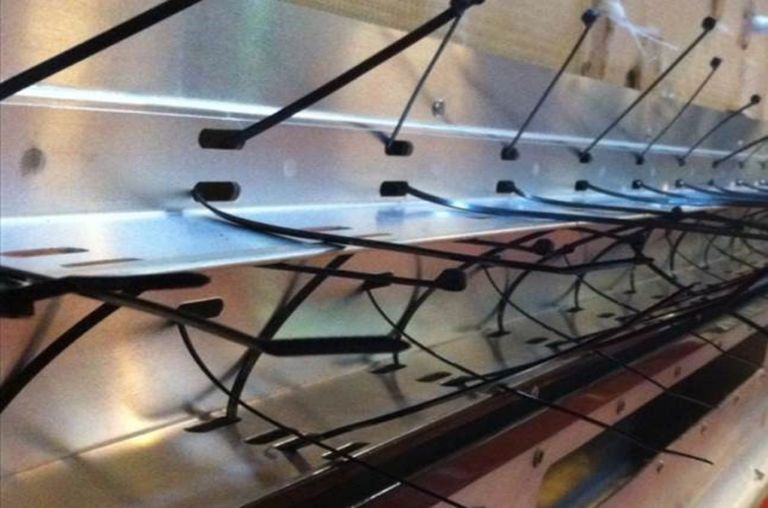
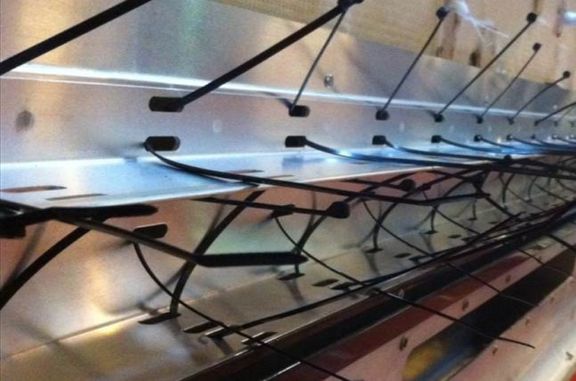
Train manufacturers are under increasing pressure to ramp up production as global orders rise. As a result, assembly time has become a key cost driver, and design-to-cost engineers now track process costs throughout product development. A major bottleneck is cable installation: workers must manually thread cable ties through laser-cut tray holes every 20–30 cm, then lay in harnesses, close/tension ties, cut them flush, and collect offcuts.
Manual cable installation remains one of the most time‑intensive steps during train manufacturing. The process time in cable management in rail vehicles can be shortened significantly by using existing tray holes more effectively.
As an example, HellermannTyton’s One-Click Mount replaces repeated tie-threading with a push-in fixing that clicks securely into the tray hole. There are even versions designed to prevent twisting in oval holes. The one-click-mount comes with a pre-inserted cable tie, reducing repetitive handling. This approach also enables pre-installation on trays or harnesses, making prefabrication more feasible and cutting assembly steps. Although the mount-and-tie combination may appear more expensive as a C-part, the time savings and freed-up assembly resources can make it economically worthwhile as time saving is between two to six hours per vehicle, some tests have shown.
Find out more in this article about fast wire installation in rolling stock.
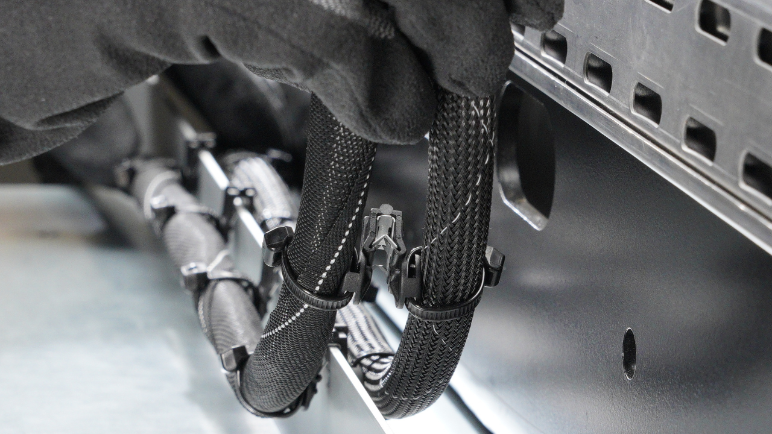
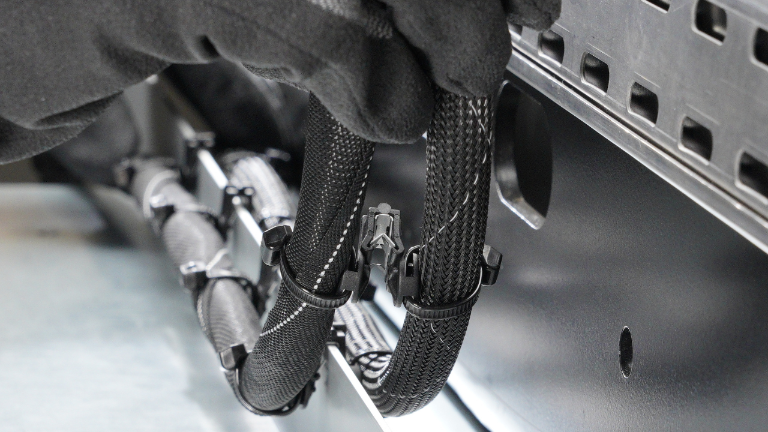
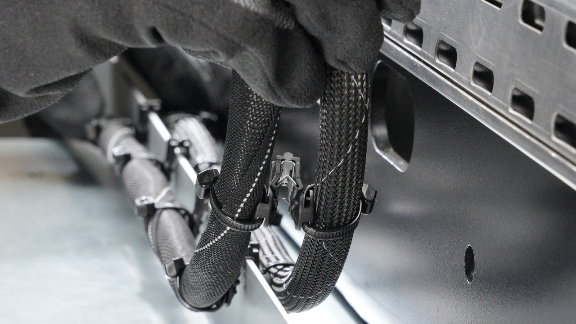
Railway vehicle design is constantly evolving, making cable management more complex as modern trains carry cables for power, data, and signalling. The core challenge is to route and secure growing amounts of wiring quickly, reliably, and at the lowest possible cost, especially in difficult areas such as around doors where cables extend from ducts and trays.
Traditionally, cables have been fixed using metal butts riveted into place, but this approach is labour-intensive, adds weight, and can limit pre-assembly options. To improve efficiency in railway cabling, manufacturers are increasingly adopting edge clips which use existing edges as fixing points to hold harnesses securely even under vibration. Edge clips can be pushed on by hand without tools, work well in tight spaces, and are well suited to situations where drilling or adhesives are not practical. A major advantage is that they can be pre-assembled onto the harness, reducing installation time during train construction.
A newer edge clip variant - EdgeClip T50ROSCBTO2SET - enables parallel routing of two cables or harnesses on both sides of an edge. This can significantly cut fixing points and cable installation in the rail industry. Because trains typically operate for decades and undergo refurbishment and cable overhauls during their lifetime, the time and cost savings can recur during maintenance as well.
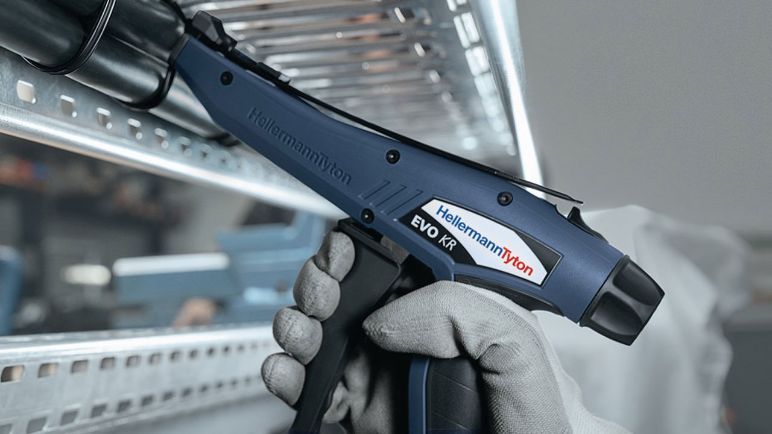
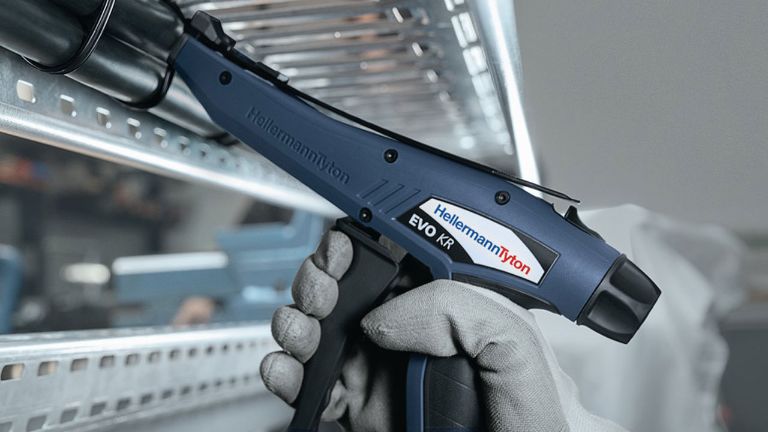
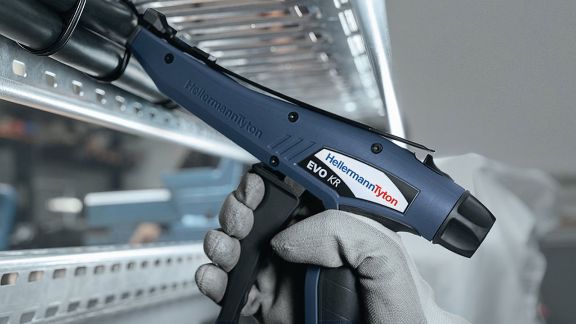
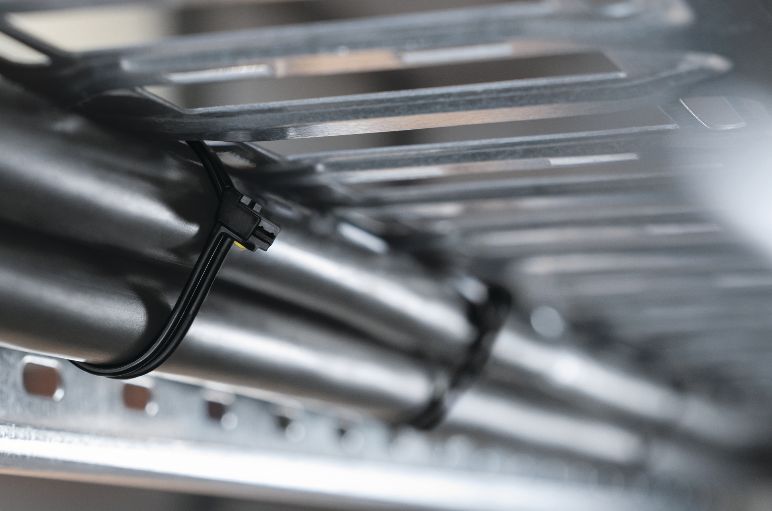
The rail industry places exceptionally high demands on fastening solutions for railway cabling. Cable harnesses and protective components must stay reliably fixed for years despite constant vibration, shock loads, temperature swings, and tight installation spaces. Heavy duty cable ties of the KR series are designed for these demanding environments, providing secure bundling and fixing where conventional ties may reach their limits.
The KR range features cable ties for railway wiring: a glass fibre-reinforced pin is pressed into the strap with a dedicated tool, deforming the plastic in a controlled “deep drawing” process. The result is a high-strength, belt-like closure that resists high tensile loads and helps maintain a dependable hold over time.
A further advantage in railway installation is component protection. Unlike standard serrated ties, KR ties offer a smooth inner strap surface, reducing the risk of abrasion or damage to cable insulation, protective conduits, hoses, or sleeves. These cable ties are approved according to the vibration norm CEI 61373.
Typical railway use cases of vibration-resistant cable ties include:
Learn more about cable ties and tools in railway cable management
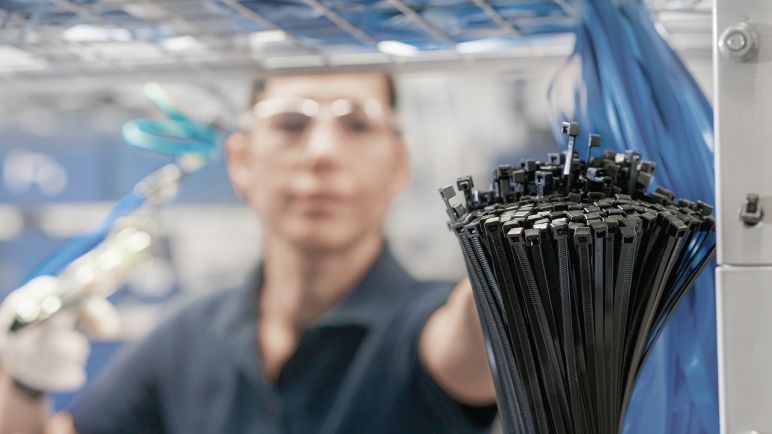
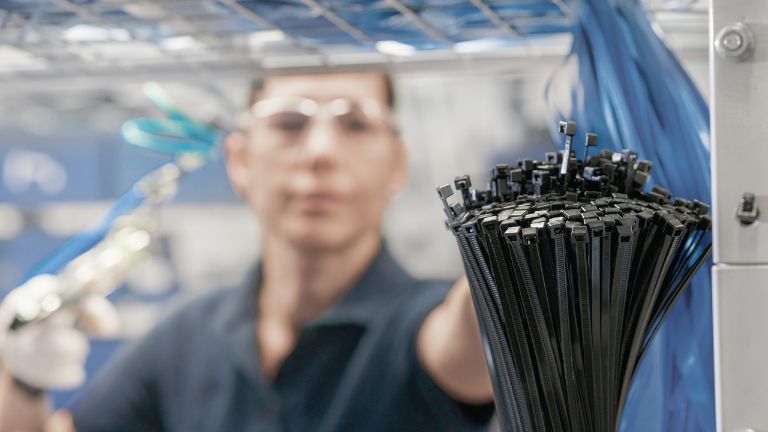
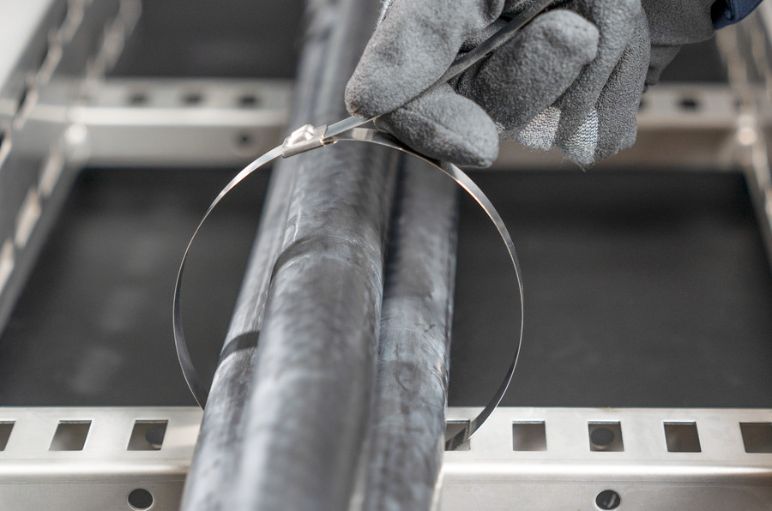
In addition to the KR series, HellermannTyton offers a wide variety of cable ties and fastening solutions to meet different railway standards and installation scenarios. The range includes different types of cable fixing products for smart cable management in the rail industry/different types of cable ties for smart railway wiring: inside-serrated and outside-serrated cable ties for strong grip, ties without serrations for particularly gentle bundling, releasable versions for applications where rework or maintenance access is needed, as well as stainless steel cable ties, and heavy-duty cable ties.
Beyond cable ties, the portfolio also covers mounts, clips, clamps, and other fastening systems to support secure routing and fixing throughout the vehicle. To explore where these solutions can be used in railway cabling and how to select the right option, this eLearning provides practical guidance and application-focused recommendations.



Rodent damage is an invisible but costly challenge in the railway industry. Rat and mustelids chew through signalling cables, fibre‑optic lines and wiring insulation, leading to failures, delays and expensive repairs. That is why many operators are looking for rodent-proof cable protection in the railway industry.
Drawing on behavioural insights from rodent experts and rigorous testing to railway standards, HellermannTyton expert Sylvie Herniou explains why chemical repellents often lose their effectiveness and how rail operators can protect their networks proactively with cable sleeves. HellermannTyton team developed Helagaine Twist‑In RR, a self‑wrapping, highly durable, rodent‑repellent sleeving engineered for the demanding environments of tunnels, sewers and trackside cable installations in the railway industry.
Already adopted by major operators such as SNCF, Twist‑In RR is proving its value cable protection for the railway industry. One innovative material is helping railway operators reduce the risk of network outages, lower maintenance requirements and support network safety. Discover how rodent behaviour shaped the design of this wire protection for the railway industry.
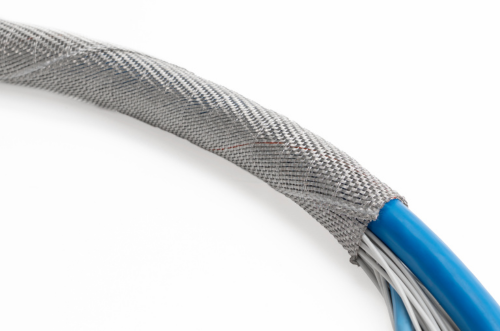
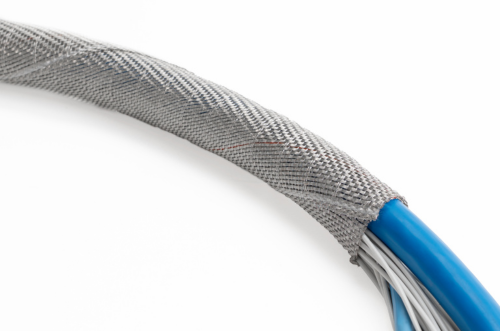
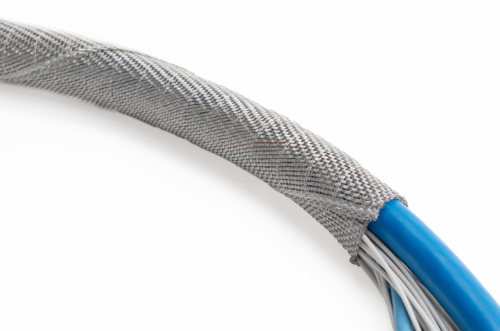
The Twist-In-EMIZ self-closing sleeve is engineered to meet the strict electromagnetic compatibility and fire protection requirements of the railway industry. Thanks to its patented System Z, it delivers EMI shielding performance of more than 60 dB, ensuring reliable electrical cable protection for the railway sector. The flexible, self-closing design allows fast installation, simplified maintenance and effortless retrofitting, making it ideal for confined spaces and areas where cables must remain accessible.
Constructed from lightweight, flame‑retardant materials and certified to EN45545‑2, Twist-In-EMIZ withstands the harsh environmental conditions common in railway operations, including abrasion, vibration, mechanical impact and salt spray exposure.
Use cases of EMI-shielding sleeves for cable protection in the railway industry are:
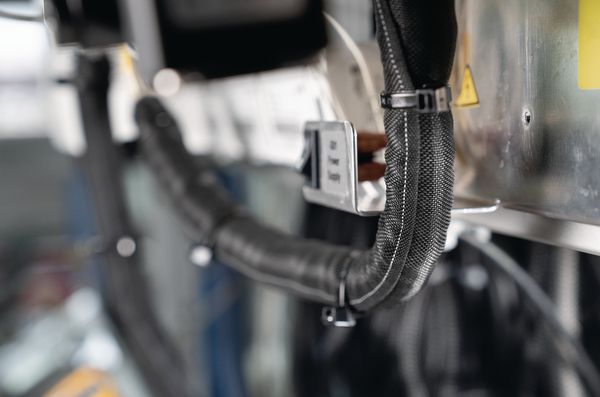
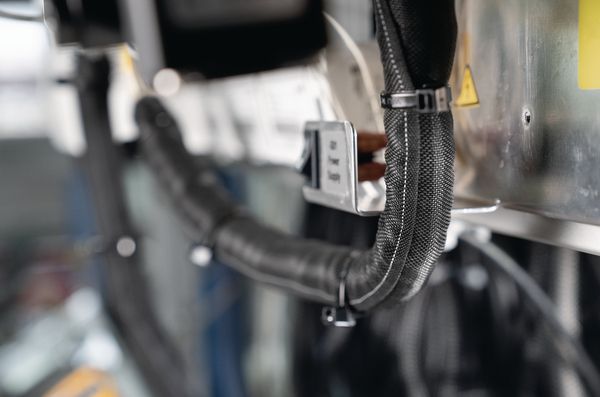
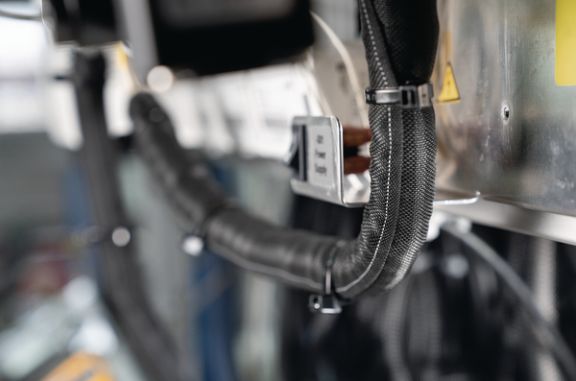
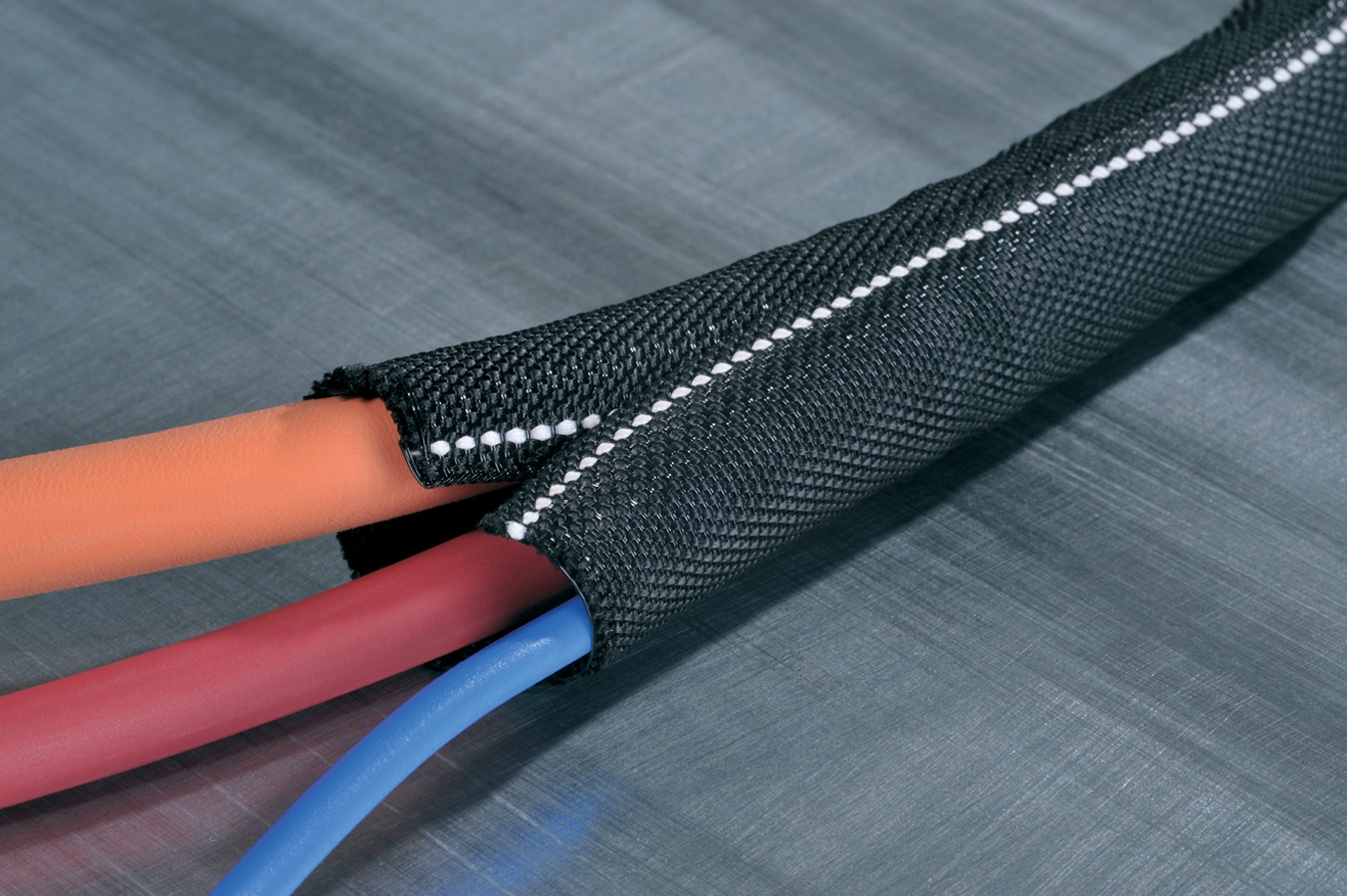
Helagaine Twist‑In‑FRX is a flame‑retardant, self‑closing polyester sleeve engineered for cable protection in safety‑critical areas of rail vehicles where strict fire performance is required. Certified to EN45545‑2 European railway standard for fire safety, it is suitable for all areas where fire propagation must be prevented. Its open, self‑closing design allows quick installation and effortless access to cable bundles for assembly, inspection and maintenance, making it particularly advantageous for retrofitting and modernisation projects on rolling stock.
Typical applications of flame-retardant cable sleeves in the railway industry are:
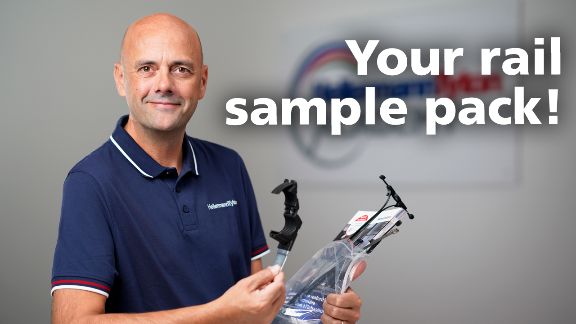
HellermannTyton cable protection products for the railway industry help rail operators reduce installation time, minimise maintenance costs and safeguard critical wiring systems. Put the portfolio to the test on your rolling stock and rail infrastructure projects and order the rail sample pack.
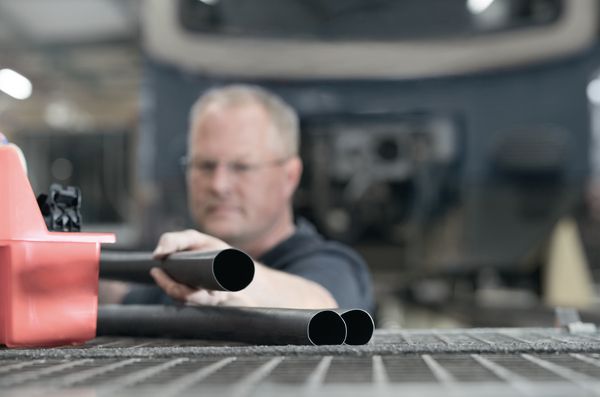
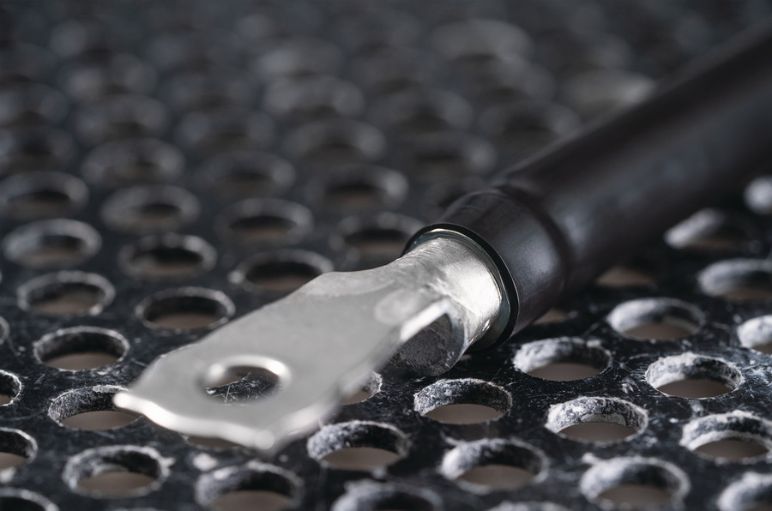
HellermannTyton offers TA37 heat shrink tubing for cable insulation and assembly in rolling stock, combining halogen‑free materials, flame‑retardant performance and an inner adhesive layer that provides a secure, moisture‑resistant seal. Certified to EN45545‑2, it meets the stringent fire‑safety requirements of the European railway industry and is engineered to deliver low smoke emission and minimal toxic or corrosive gas generation.
It also conforms to major railway standards, including BS 6853 and London Underground specification LUL E1042:A6, as well as relevant solar‑radiation test requirements, ensuring safe and durable cable protection for the railway industry. With its 3:1 shrink ratio, excellent flame‑retardant behaviour and proven compliance with multiple industry approvals, this heat shrink tubing is used:



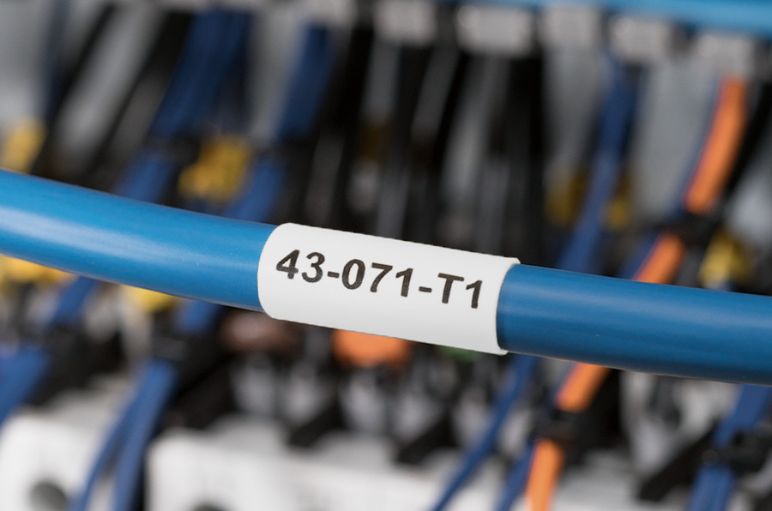
Thermal transfer printing is a reliable identification method for the railway cabling because it produces high‑durability labels for cables, wires and electrical components on rolling stock and rail infrastructure. The printing process creates a permanent, high‑contrast mark that withstands vibration, heat, UV exposure, oils and cleaning chemicals, ensuring long‑term readability throughout the entire service life of a train.
The technology works with rail‑approved materials, including flame‑retardant and EN 45545‑2 compliant labels, making it suitable for driver cabins, control cabinets, roof‑mounted equipment, bogies and underbody areas. Learn more about identification solutions for railway wiring in this eLearning.
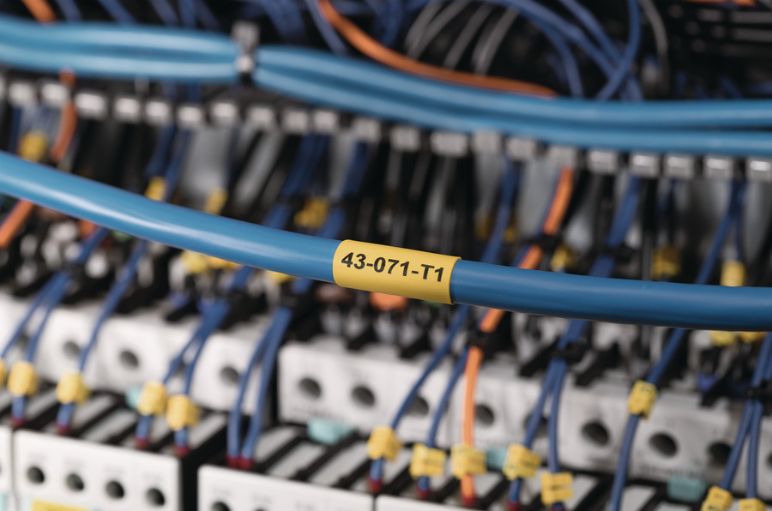
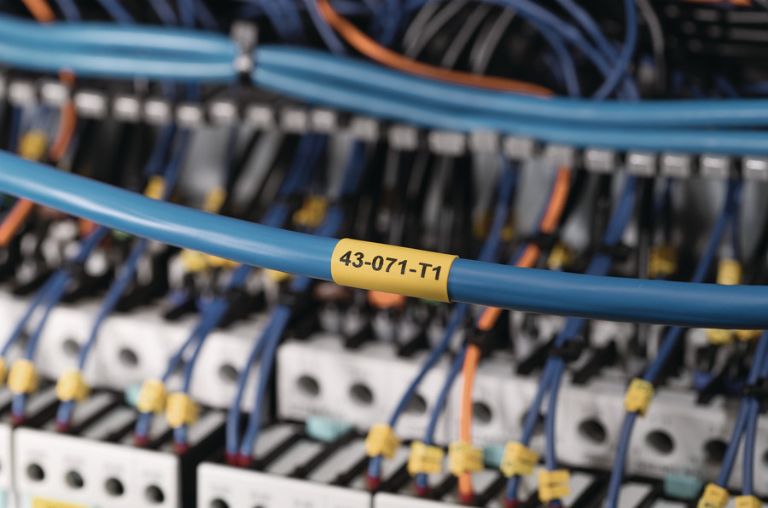
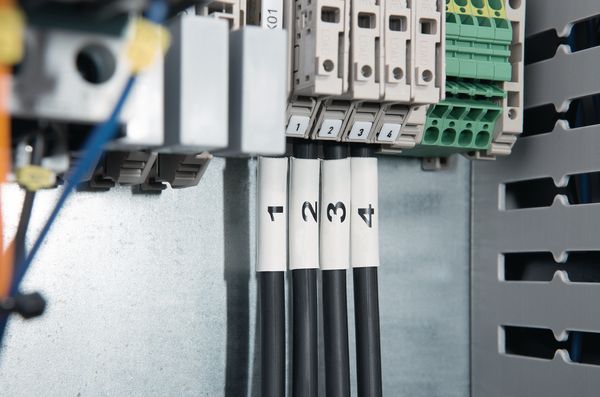
TLFX shrinkable markers provide reliable and compliant cable identification across the railway industry. Certified to European rail standards (EN 45545-2) and halogen‑free, these markers are ideal for cable management in the railway industry:
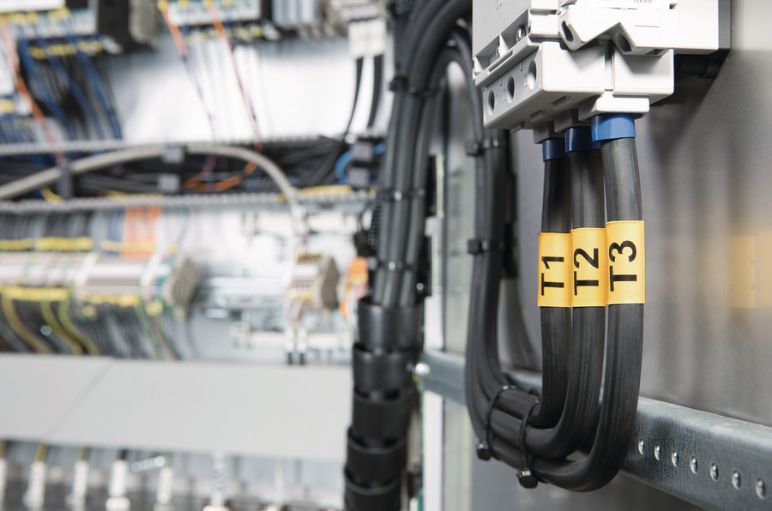
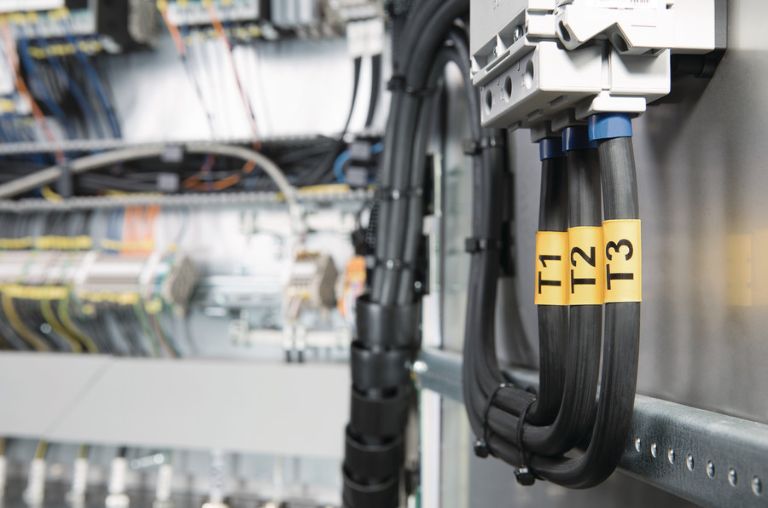
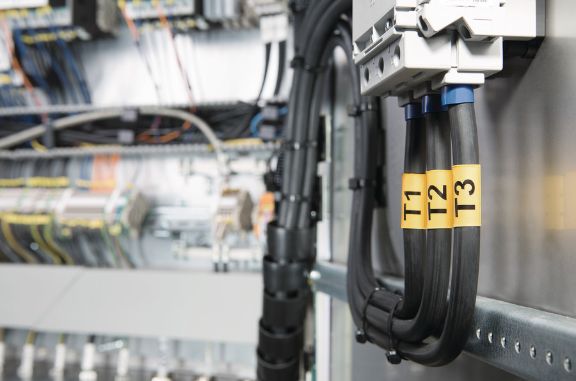
Rail vehicles frequently operate in environments where cables encounter diesel, hydraulic oil, lubricants or cleaning fluids. TLFD DS heat shrink markers conform to EN 45545, EN 50343-H, and EN 60684. They are engineered for fluid resistance and withstand exposure to common fuels (diesel), lubricants, hydraulic oils and cleaning solvents, making them ideal for labelling wires and equipment in many different applications across the railway cabling:
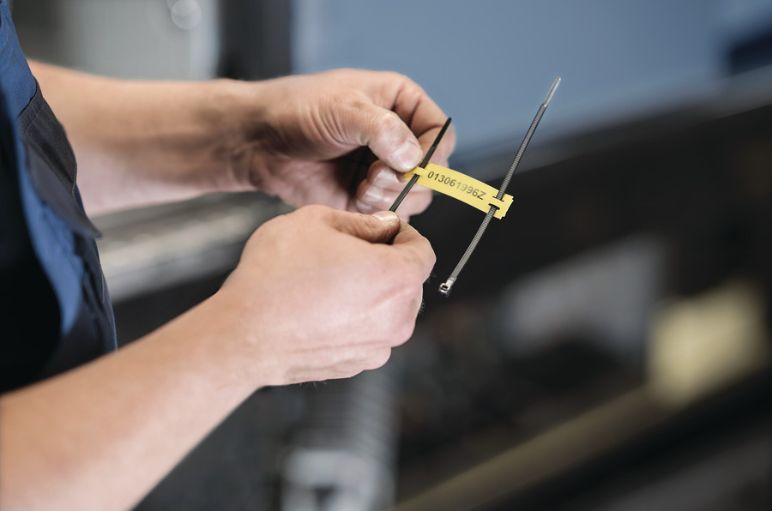
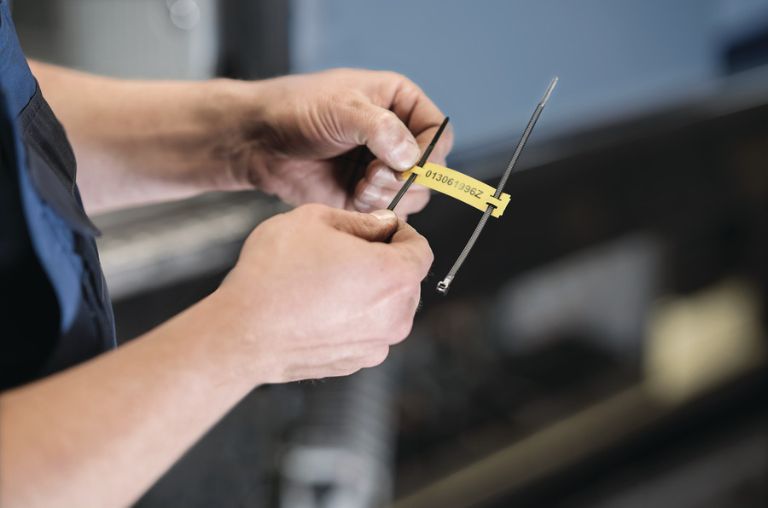
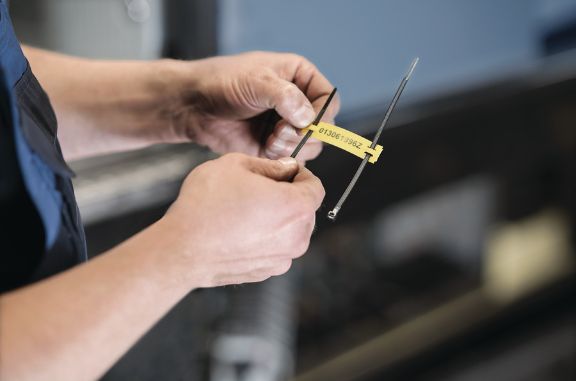
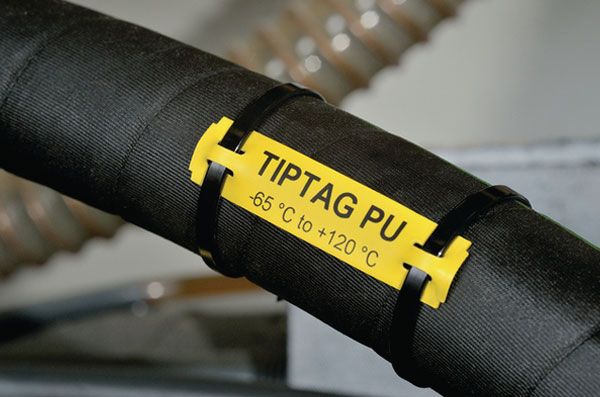
On large cable bundles exposed to harsh rail environments, Tiptag HF ensures reliable identification throughout rolling stock and railway infrastructure wiring conforming to EN 45545.. These markers offer a wide, flat tag design, providing more space for text, barcodes or coding. Integrated fixing slots allow the markers to be mounted directly onto larger bundles using standard cable ties and stay fixed in place.
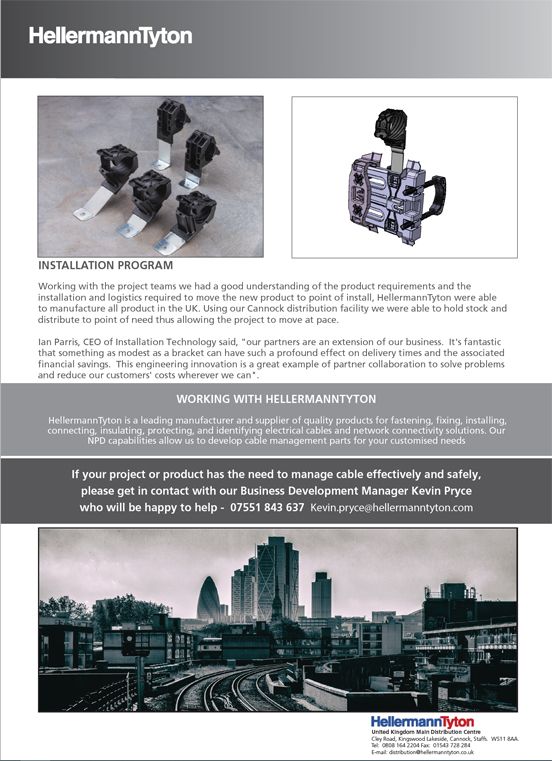
HellermannTyton solutions are already widely used in the railway industry, from rolling stock to infrastructure. So, when London Underground required a way to secure cable fixing on curved tunnel walls, it contacted us to develop a solution for fast retrofit installation and easy maintenance. The system had to fit existing tunnel geometry, support long cable runs, withstand harsh conditions, remain lightweight for handling, and meet railway standards.
Working alongside Installation Technology, HellermannTyton’s UK New Product Development team used in-house 3-D printing to develop and refine concepts, produce prototypes for on-site trials and validate performance through lab testing, including additional checks such as finite element analysis and flame testing. The final design combined a tunnel-mounted bracket paired with a reusable Ratchet P Clamp.
Read the full case study to learn how this rail cable management solution was developed.
Challenges in the rail industry consist of cable management needing to withstand constant vibration, harsh environmental conditions, limited installation space, and strict fire safety standards such as EN 45545. They are also exposed to temperature fluctuations, fluids, and electromagnetic interference from traction and control systems. At the same time, long service life expectations and safety critical identification requirements place high demands on durability, stability, and readability of all railway wiring.
No, but if you want to use products that do not comply with the EN 45545-2 standard, the grouping rules from chapter 4.3 must be observed. You can find all HellermannTyton products that comply with EN 45545-2 on our website using the search term of the same name.
Harnesses in the rail industry are typically quite large. To save space, the selected cables often have thin insulation. If the serration of the cable ties were on the inside, this could damage the cable insulation. For this reason, an outside‑serration range has been developed and is recommended for cable management in the railway industry.
Each train is different, and customer requirements are often not fully covered by the standard product range. In many railway industry cable management applications, a suitable solution is already available off the shelf. However, when this is not the case, a customised part is developed to ensure the customer’s requirements are fully met.